
What's Happening?
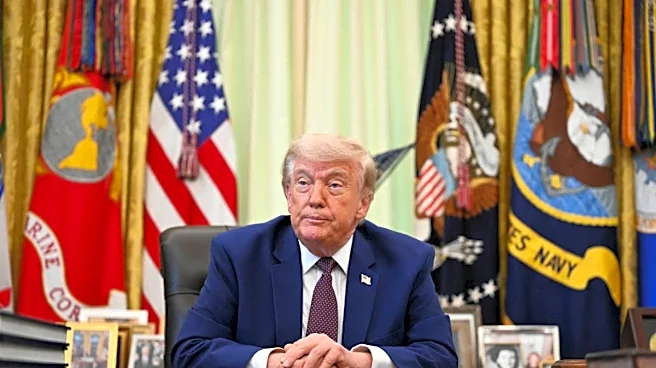
President Trump has indicated that his administration is exploring the possibility of taking an equity stake in OpenAI. This move is part of a broader strategy to ensure that the American public benefits
from the advancements in artificial intelligence. Discussions have been reported by CNBC, suggesting that the administration is considering using some of this equity to establish a 'Public Wealth Fund.' This fund would potentially distribute proceeds directly to citizens, allowing them to share in the economic growth driven by AI technologies. The idea aligns with previous government actions, such as the acquisition of a stake in Intel, and reflects ongoing conversations between Trump and AI executives, including OpenAI's CEO Sam Altman.
Why It's Important?
The potential government stake in OpenAI represents a significant shift in how public and private sectors might collaborate in the tech industry. By involving the government directly in AI companies, there is an opportunity to democratize the financial benefits of AI advancements, potentially reducing economic inequality. This approach could set a precedent for future government involvement in high-growth tech sectors, influencing public policy and economic strategies. However, it also raises concerns about increased corporate-government fusion, as noted by critics like David Sacks. The proposal by Senator Bernie Sanders for a one-time tax on AI companies further highlights the political interest in ensuring that AI's economic benefits are widely shared.
What's Next?
If the Trump administration proceeds with acquiring an equity stake in OpenAI, it could lead to the establishment of the proposed Public Wealth Fund. This would require detailed planning on how the fund would operate and distribute benefits to citizens. Additionally, the proposal by Senator Sanders for a stock-based tax on AI companies could gain traction, potentially influencing legislative actions. Stakeholders, including AI companies and policymakers, will likely engage in further discussions to address the implications of these proposals. The outcome could significantly impact the future landscape of AI development and its integration into the U.S. economy.
Beyond the Headlines
The potential government involvement in AI companies like OpenAI raises ethical and regulatory questions about the balance of power between public interests and corporate autonomy. It could lead to increased scrutiny of how AI technologies are developed and deployed, ensuring they align with public welfare goals. This development might also influence global perspectives on government roles in tech innovation, potentially inspiring similar initiatives in other countries. The long-term effects could include shifts in how technological advancements are funded and how their benefits are distributed across society.