



What's Happening?
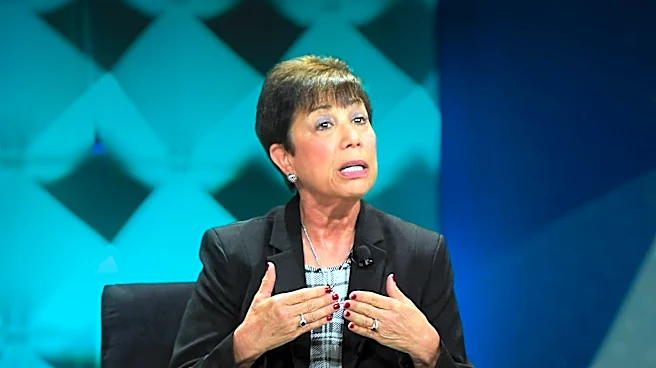
Megan Romer, national co-chair of the Democratic Socialists of America (DSA), has drawn significant criticism from both external media and within her own organization following an interview with The New Yorker editor David Remnick. The interview, which
was widely described as a 'disaster,' saw Romer struggling to answer basic policy questions, particularly regarding the taxation of millionaires and her stance on the Israeli-Palestinian conflict. For instance, when pressed on a specific number for 'taxing the hell out of millionaires,' Romer admitted she didn't 'have a solid' answer. She also stated she 'probably would have' attended a controversial pro-Palestinian rally held on October 8, 2023, which many criticized for condoning Hamas's attack on Israel. This performance has highlighted internal divisions within the DSA, with some members expressing concern over the damage caused and calling for improved media training for the organization's leadership. The DSA has since announced plans to hire a national press coordinator.
Why It's Important?
This incident is important as it exposes the challenges and internal tensions within a growing political organization like the DSA, particularly in its efforts to articulate its platform to a broader public. Romer's perceived unpreparedness and controversial statements risk alienating potential supporters and providing ammunition for critics of socialist policies. The DSA's struggle to present a unified and coherent message on complex issues like economic policy and international relations can undermine its credibility and effectiveness in the U.S. political landscape. Furthermore, the backlash underscores the increasing scrutiny faced by progressive movements and the need for their leaders to be adept at navigating media interactions and clearly communicating their positions to a diverse audience, including those outside their ideological base. The internal debate over Romer's performance also reflects deeper ideological rifts within the DSA, ranging from FDR-style social democrats to Marxist-Leninists.
What's Next?
In response to the widespread criticism, the DSA plans to hire a national press coordinator, signaling an effort to improve media training and public communication strategies for its leadership. While there is little immediate chance of Romer being replaced as co-chair before her term ends next summer, due to the requirement of a two-thirds majority vote from the National Political Committee, some members anticipate she may 'pull back' from public appearances. The incident is likely to prompt further internal discussions within the DSA regarding spokesperson roles and media engagement protocols. The organization will need to address how it presents its diverse ideological viewpoints while maintaining a cohesive public image, especially as it continues to grow and attract more attention in U.S. politics. The effectiveness of the new press coordinator and any subsequent changes in media strategy will be crucial in shaping the DSA's public perception moving forward.
Beyond the Headlines
The controversy surrounding Megan Romer's interview extends beyond immediate media missteps, touching upon deeper issues of political communication, ideological coherence, and the public perception of socialist movements in the U.S. The incident highlights the difficulty for organizations with broad internal ideological spectrums, like the DSA, to present a unified front on complex policy issues. Romer's comments on the Israeli-Palestinian conflict, in particular, underscore the sensitive nature of such topics and the potential for missteps to be interpreted as condoning controversial actions, further complicating the DSA's efforts to gain mainstream acceptance. This event also reflects a broader trend in contemporary U.S. politics where public figures are under constant scrutiny, and any perceived lack of preparedness or controversial statement can quickly go viral, shaping public opinion and influencing political discourse. The DSA's response to this challenge will be indicative of its maturity as a political force and its ability to adapt to the demands of modern media and political engagement.