


What's Happening?
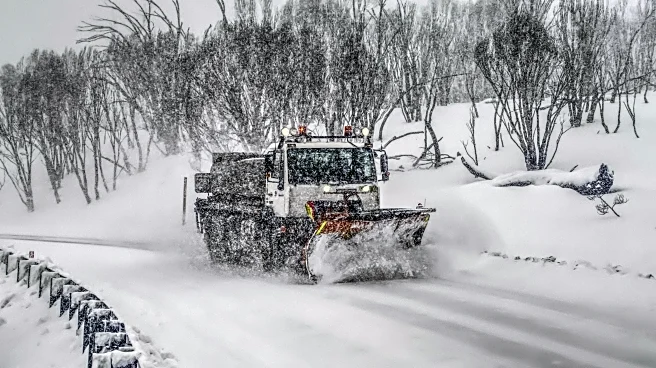
A recent AP-NORC poll highlights the significant impact of extreme cold weather on Americans, with 6 in 10 adults reporting personal effects from severe cold or winter storms in the past five years. This marks an increase from a previous poll in 2025,
where about half of U.S. adults reported similar experiences. The poll indicates that the recent winter brought unusually cold temperatures, particularly affecting the East Coast and causing widespread power outages in the South. The cold weather has led to higher utility bills, work and school cancellations, and travel disruptions. The findings suggest that while extreme cold is less frequent due to climate change, its impact is more intense when it occurs.
Why It's Important?
The poll underscores the growing challenges posed by extreme weather events in the U.S., highlighting the economic and social disruptions caused by severe cold. Rising utility bills and the stress associated with them are significant concerns for many Americans, with nearly 4 in 10 adults citing electricity costs as a major source of stress. The findings also reveal a partisan divide in perceptions of climate change's role in extreme weather, with Democrats more likely than Republicans to attribute such events to climate change. This divide could influence public policy and climate action debates, as the frequency and intensity of extreme weather events continue to affect daily life.
What's Next?
As extreme weather events become more common, there is a need for increased resilience and adaptation strategies. This includes improving infrastructure to withstand severe weather, enhancing emergency response systems, and addressing the economic impacts on affected communities. Policymakers may face pressure to address climate change more aggressively, as public awareness and concern about its effects grow. Additionally, ongoing research into the links between climate change and extreme weather will be crucial in shaping future policies and preparedness efforts.