



What's Happening?
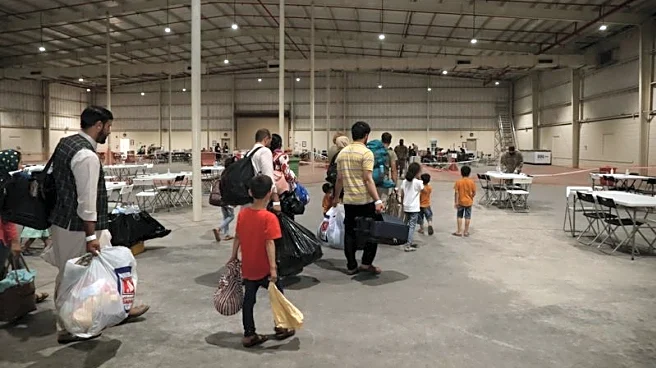
The United Nations has raised alarms over the return of 5.4 million Afghans from Pakistan and Iran since October 2023, a situation that is pushing Afghanistan to the brink of a humanitarian crisis. This mass return is largely due to crackdowns by Pakistan and Iran on undocumented
migrants, leading to forced expulsions. Many of these returnees were born in Pakistan and had established lives there. The UNHCR's Afghanistan representative, Arafat Jamal, highlighted the unprecedented scale of these returns, noting that 2.9 million people returned in the past year alone. Afghanistan, already grappling with a weak economy, severe drought, and recent earthquakes, is struggling to accommodate the influx, which represents 12% of its population.
Why It's Important?
The return of millions of Afghans is exacerbating an already dire humanitarian situation in Afghanistan. The country is facing significant challenges, including a poor human rights record, particularly concerning women and girls. The massive influx of returnees is straining resources, with many families resorting to negative coping mechanisms such as skipping meals or selling belongings. This situation highlights the urgent need for international support and sustainable solutions to prevent further deterioration of living conditions in Afghanistan. The crisis also underscores the broader regional implications of migration policies in neighboring countries and their impact on Afghanistan's stability.
What's Next?
The Afghan government, along with international organizations, is likely to continue providing basic aid to returnees, including food, cash, and transportation. However, the sustainability of these efforts is in question, as resources are limited. The UN and other humanitarian agencies may increase calls for international assistance to support Afghanistan in managing this crisis. Additionally, there may be further diplomatic discussions between Afghanistan, Pakistan, and Iran to address the root causes of migration and explore more humane solutions for displaced populations.