





What's Happening?
Okra Solar, a Nigerian provider of mesh-grid technology for off-grid communities, has secured a $7 million debt facility from British International Investment (BII), the UK’s development finance institution. This funding will enable Okra Solar to procure
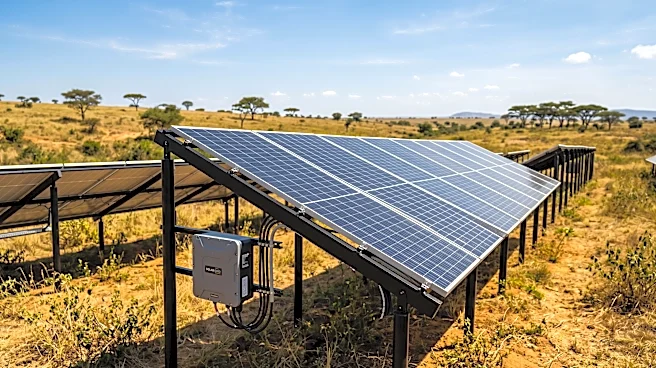
equipment for approximately 150,000 new connections, with the potential to provide electricity to 750,000 people in rural Nigeria for the first time. The investment aims to accelerate access to reliable and clean electricity in Nigeria, a country where an estimated 90 million people lack dependable power. Okra Solar's mesh-grid technology combines solar generation, battery storage, and smart controls, allowing neighboring homes and businesses to share electricity cost-efficiently. The company's CEO, Afnan Hannan, stated that the facility will significantly reduce equipment delivery times and costs, allowing for faster deployment of electricity.
Why It's Important?
This investment is significant for the U.S. in several ways, particularly in the context of global energy transition and development. While directly impacting Nigeria, the success of innovative off-grid solutions like Okra Solar's mesh-grids demonstrates viable models for expanding clean energy access in developing nations. This can inform U.S. foreign policy and aid strategies focused on sustainable development and energy security. For U.S. businesses in the renewable energy sector, it highlights potential growth markets and the increasing demand for scalable, decentralized energy solutions. Furthermore, the emphasis on clean power aligns with global climate goals, which the U.S. is committed to. By supporting such initiatives, the U.S. can indirectly benefit from a more stable global energy landscape and reduced carbon emissions, contributing to broader environmental objectives.
What's Next?
With the $7 million debt facility, Okra Solar plans to procure long lead time components, batteries, and solar PV equipment upfront and in volume. This strategic move is expected to reduce costs and ensure stock availability, significantly shortening delivery times to Nigeria from four months to approximately two months. The company aims to expand its current installed base of over 13,000 households and 2.3 MW of installed capacity by more than tenfold. This expansion will be supported by Nigeria’s Distributed Access through Renewable Energy Scale-up (DARES) program, which provides results-based financing for new electricity connections and includes mesh-grids as eligible technology. The British Deputy High Commissioner in Lagos, Jonny Baxter, emphasized the UK's commitment to supporting innovative Nigerian solutions for economic growth and clean power access.
Beyond the Headlines
The investment in Okra Solar highlights a critical shift in how energy access challenges are being addressed in developing regions. The mesh-grid model, which allows for cost-efficient electricity sharing among communities, represents a decentralized approach that can bypass the limitations and high costs of traditional grid expansion. This model could serve as a blueprint for other regions facing similar energy deficits, including remote or underserved areas within the U.S. The focus on 'clean power' also underscores the dual benefit of such projects: providing essential services while simultaneously contributing to climate change mitigation. This development could encourage further innovation in distributed renewable energy technologies and business models, potentially influencing future energy infrastructure planning and investment strategies globally, including in the U.S.