





What's Happening?
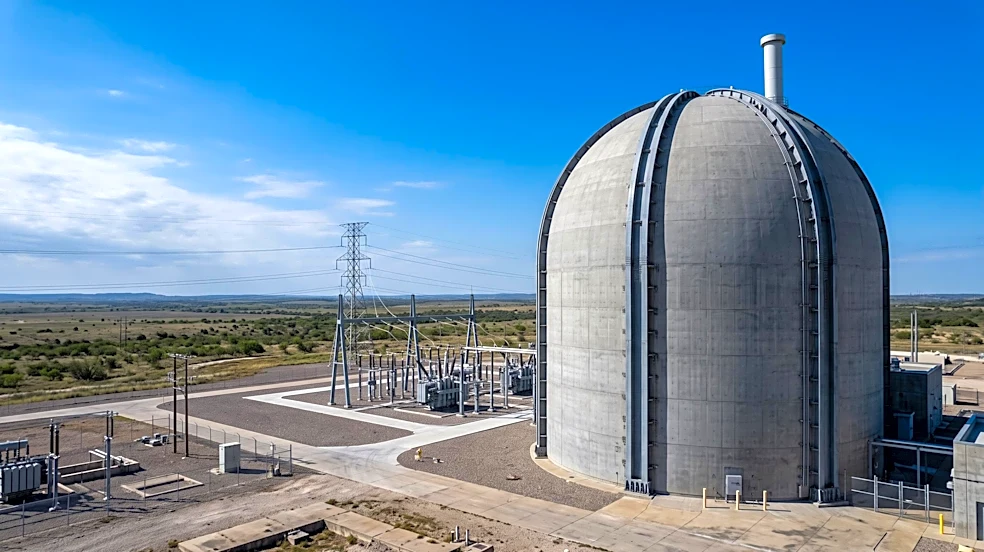
American Electric Power (AEP) and X-energy have entered into a joint development agreement to evaluate the construction of a 960-MW small modular reactor (SMR) project in Sullivan County, Indiana. The proposed plant would consist of 12 of X-energy’s 80-MW
Xe-100 reactors, configured in three groups of four, at or near AEP-owned brownfield site of the former Breed Generating Station. Amazon is providing development funding and intends to purchase the plant's electricity under a long-term contract, aiming to cover the facility's costs and operations. This project represents the second deployment under Amazon and X-energy’s collaboration to develop over 5 GW of new U.S. nuclear capacity by 2039.
Why It's Important?
This initiative is highly significant for the U.S. energy landscape, particularly in the context of decarbonization and grid reliability. The proposed nuclear plant at a retired coal site demonstrates a strategic shift towards clean energy while repurposing existing industrial infrastructure, potentially bringing economic revitalization to the region. Amazon's involvement, through development funding and a long-term power purchase agreement, is crucial as it de-risks the project for AEP and protects existing utility customers from development costs, a major hurdle for new nuclear projects. This model could set a precedent for future private sector investment in advanced nuclear technology, accelerating the deployment of SMRs across the U.S. and contributing to national energy security and climate goals. It also highlights the growing demand for carbon-free power from major corporations like Amazon.
What's Next?
The project is currently in the feasibility stage, with AEP and X-energy evaluating the site and technology. A final investment decision (FID) is required before construction can proceed. If approved, the plant would supply electricity to the regional grid and could operate for over 60 years. Amazon's commitment to purchase electricity once the facility is operational will be a key driver. Regulatory approvals from the Nuclear Regulatory Commission (NRC) will be a critical next step, which can be a lengthy process. The success of this project could encourage other utilities and tech companies to explore similar partnerships, potentially leading to a surge in SMR deployments and further investment in advanced nuclear technologies across the U.S.
Beyond the Headlines
The proposed nuclear plant in Indiana represents a profound shift in how large-scale energy projects are financed and developed in the U.S., moving towards a model where major corporate consumers directly support clean energy infrastructure. This initiative not only addresses climate change but also tackles the complex issue of economic transition in coal-dependent regions, offering new high-tech jobs and a sustainable future. The use of SMRs, specifically X-energy's Xe-100 technology, highlights a broader technological evolution in nuclear power, emphasizing enhanced safety features and modular construction for faster deployment. Ethically, this model raises questions about the role of private corporations in shaping national energy policy and infrastructure, and the balance between corporate sustainability goals and public utility responsibilities. It also underscores the long-term commitment required for nuclear energy, spanning decades of operation and waste management.