



What's Happening?
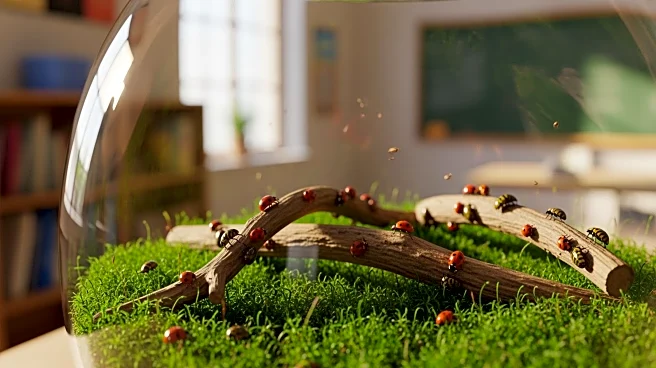
In recent years, there has been a growing trend among teachers to use arthropods, such as insects, isopods, and spiders, as classroom pets. This shift is driven by the educational benefits these creatures offer, similar to traditional class pets like
guinea pigs or hamsters. Teachers like Phil Dreste from Kenwood Elementary School in Champaign, Illinois, have found that these 'creepy-crawlies' can engage students and help them develop responsibility and empathy. Dreste uses a variety of insects and reptiles to calm students and enhance their emotional well-being. The Pet Care Trust, which provides grants for classroom pets, reports an increase in requests for arthropods, with jumping spiders seeing a notable rise in popularity. These creatures are not only cost-effective but also require less maintenance compared to traditional pets.
Why It's Important?
The use of arthropods as classroom pets is significant because it challenges traditional perceptions of what constitutes a suitable class pet. By introducing students to these often misunderstood creatures, teachers can dispel myths and foster a greater appreciation for biodiversity. This approach also supports social-emotional learning, as caring for these pets can reduce stress and develop compassion among students. Additionally, the lower maintenance costs and ease of care make arthropods an accessible option for schools with limited resources. This trend reflects a broader educational shift towards incorporating diverse and interactive learning tools to enhance student engagement and understanding of the natural world.
What's Next?
As the popularity of arthropods in classrooms continues to grow, more research is likely to be conducted on their impact on student engagement and teacher well-being. The ongoing national study by Purdue College of Veterinary Medicine aims to explore how different types of class pets affect student behavior and teacher stress. This research could provide valuable insights into the benefits of using non-traditional pets in educational settings. Additionally, as more teachers adopt this practice, there may be increased collaboration with entomologists and other experts to develop comprehensive educational programs that integrate these creatures into the curriculum.
Beyond the Headlines
The integration of arthropods into classrooms may have broader implications for environmental education. By teaching students to appreciate and understand these creatures, educators can instill a sense of stewardship for the environment. This approach aligns with efforts to promote sustainability and conservation, as students learn about the ecological roles of insects and other arthropods. Furthermore, this trend may influence future educational policies and funding priorities, as schools recognize the value of diverse and interactive learning experiences.