


What's Happening?
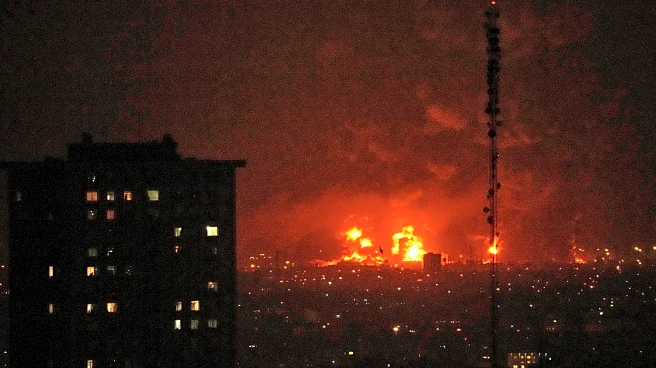
The United States has a longstanding history of collaboration with Kurdish militias, a relationship that is once again in focus amid the ongoing U.S.-Israeli conflict with Iran. NPR's Ayesha Rascoe discussed with journalist Wladimir van Wilgenburg the potential
role that Kurdish forces might play in this geopolitical scenario. Historically, the Kurds have been pivotal allies for the U.S. in the Middle East, often serving as ground forces in conflicts where direct U.S. military involvement was limited. This partnership has been particularly significant in regions like Iraq and Syria, where Kurdish militias have been instrumental in combating extremist groups. The current conflict involving the U.S. and Israel against Iran raises questions about how Kurdish forces might be leveraged or affected, given their strategic positioning and historical alliances.
Why It's Important?
The involvement of Kurdish militias in the U.S.-Israeli conflict with Iran could have significant implications for regional stability and U.S. foreign policy. The Kurds have been a reliable partner for the U.S., providing critical support in military operations against common adversaries. Their involvement could influence the dynamics of the conflict, potentially providing the U.S. and its allies with strategic advantages. However, this also places the Kurds in a precarious position, as their alliances could lead to repercussions from neighboring countries and other regional powers. The outcome of this conflict could affect U.S. relations with Middle Eastern nations and impact the broader geopolitical landscape, particularly in terms of military strategy and diplomatic relations.
What's Next?
As the conflict progresses, the role of Kurdish militias will likely be scrutinized by both regional and international actors. The U.S. may seek to strengthen its ties with Kurdish forces to bolster its strategic position against Iran. However, this could also lead to increased tensions with countries like Turkey, which has historically opposed Kurdish autonomy. The situation may prompt diplomatic efforts to balance these alliances while avoiding further escalation. Observers will be watching for any shifts in U.S. military strategy or diplomatic initiatives aimed at resolving the conflict and stabilizing the region.