




What's Happening?
Senator Raphael Warnock (D-GA) has outlined a three-step plan aimed at expanding Democratic power should the party regain control of Congress. The plan includes launching investigations into the redistricting processes in Southern states, with a focus
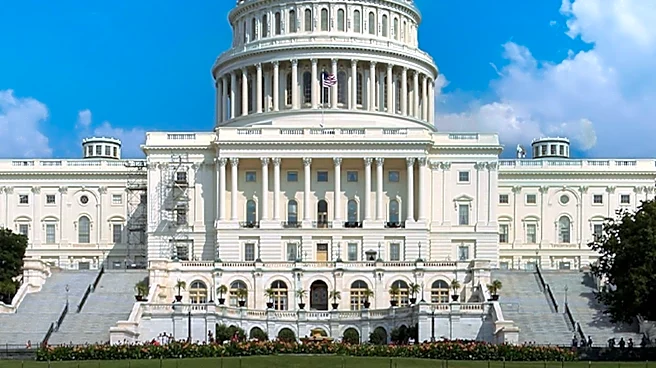
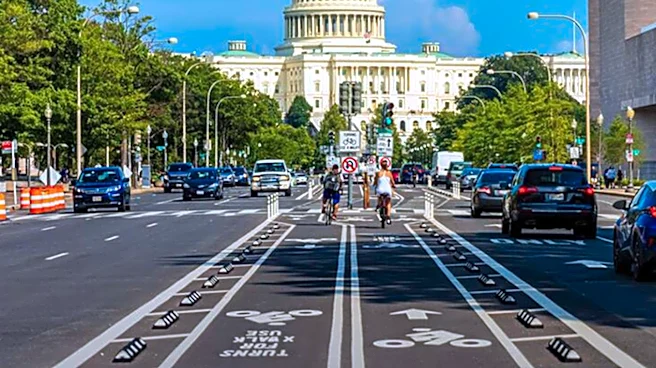
on compelling state officials to testify and determining if federal laws were violated. Senator Warnock specifically mentioned the need to investigate those who he claims 'rushed to silence black voices' and 'rig the maps.' Additionally, his plan calls for granting statehood to Washington, D.C., and Puerto Rico, which would add four new seats to the U.S. Senate. The third component is a proposal for a constitutional amendment to explicitly guarantee the right to vote. Senator Warnock referenced the Supreme Court's April ruling in Louisiana v. Callais, which he criticized for weakening the Voting Rights Act, though he noted that intentional racial discrimination remains illegal. He emphasized that Democrats must be ready to act immediately when they next hold the 'levers of power.'
Why It's Important?
Senator Warnock's plan carries significant implications for the U.S. political landscape, particularly concerning electoral power dynamics and civil rights. Investigating redistricting processes in Southern states could lead to legal challenges and potential restructuring of congressional districts, which would directly impact the balance of power in the House of Representatives. Granting statehood to Washington, D.C., and Puerto Rico would fundamentally alter the composition of the U.S. Senate by adding four new senators, likely shifting the partisan balance. This move would also grant full representation to hundreds of thousands of U.S. citizens who currently lack it. A constitutional amendment guaranteeing the right to vote would establish a uniform federal standard for voting rights, potentially overriding state-level restrictions and expanding voter access. These proposals collectively aim to strengthen Democratic influence and address what Senator Warnock perceives as efforts to suppress minority votes, particularly in the wake of recent Supreme Court decisions affecting the Voting Rights Act.
What's Next?
Should Democrats gain control of at least one chamber of Congress, Senator Warnock's proposals indicate a clear legislative agenda. The immediate next step would likely involve congressional committees initiating investigations into redistricting practices in Southern states. This could lead to subpoenas for state officials and public hearings, potentially uncovering evidence of federal law violations. The push for statehood for Washington, D.C., and Puerto Rico would require significant legislative effort, including votes in both the House and Senate, and would face considerable political opposition. Similarly, a constitutional amendment guaranteeing the right to vote would necessitate a two-thirds vote in both chambers of Congress and ratification by three-fourths of the states, a lengthy and challenging process. These actions would undoubtedly spark intense debate and legal challenges, shaping the future of U.S. electoral integrity and representation.
Beyond the Headlines
Senator Warnock's plan delves into deeper issues of democratic representation, racial equity, and the balance of power between federal and state governments. The focus on investigating redistricting in Southern states highlights ongoing concerns about gerrymandering and its impact on minority voting strength, raising questions about the fairness and legitimacy of electoral maps. The call for statehood for Washington, D.C., and Puerto Rico touches upon historical grievances regarding taxation without representation and self-determination for U.S. territories, potentially redefining the concept of American citizenship and political inclusion. Furthermore, the proposed constitutional amendment for voting rights underscores a fundamental debate about the scope of federal protection for suffrage, especially in light of evolving interpretations of the Voting Rights Act. These initiatives reflect a broader ideological struggle over who participates in democracy and how political power is distributed across the nation.