


What's Happening?
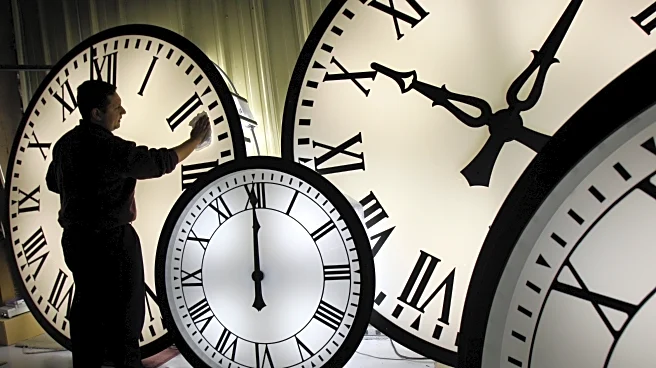
Daylight saving time, which involves setting clocks forward by one hour, is set to occur on March 8, 2026. Despite its historical roots in energy conservation during World War I, recent studies highlight its negative health impacts. Research from Johns
Hopkins University indicates that the transition can increase risks of heart attacks, strokes, and mood disturbances. Additionally, a study from the University of Colorado Boulder and the Fred Hutchinson Cancer Research Center found a 6% rise in fatal car accidents following the time change. The disruption of circadian rhythms due to increased evening light is a significant factor, affecting sleep patterns and overall health. Despite these findings, daylight saving time remains in practice across most of the U.S., with exceptions in Hawaii, most of Arizona, and several U.S. territories.
Why It's Important?
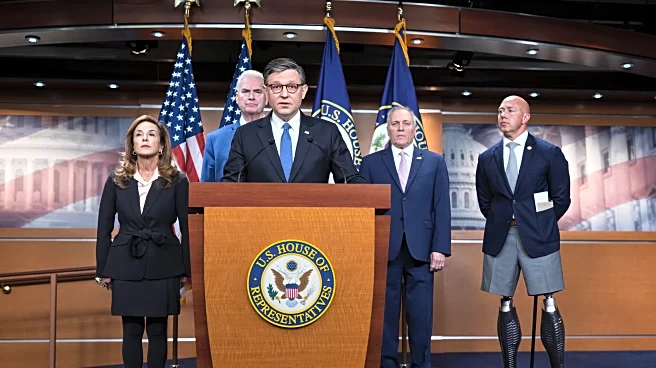
The continuation of daylight saving time despite its health risks raises questions about public policy priorities. The practice affects millions of Americans, potentially increasing healthcare costs due to its association with cardiovascular issues and accidents. Vulnerable groups, such as children and shift workers, are particularly at risk. The persistence of daylight saving time reflects a complex interplay of historical precedent, legislative inertia, and public opinion. Efforts to change the practice, such as the Daylight Act of 2026, have yet to succeed, highlighting the challenges in altering long-standing policies even in the face of scientific evidence.
What's Next?
Legislative efforts to modify or abolish daylight saving time continue, with recent proposals aiming to make it permanent or adjust time zones. However, these initiatives face significant hurdles in Congress. Public opinion remains divided, with some favoring more evening light and others concerned about morning darkness. The American Academy of Sleep Medicine offers strategies to mitigate the transition's impact, such as gradually adjusting sleep schedules. The ongoing debate suggests that any change will require balancing scientific findings with public preferences and political feasibility.