





What's Happening?
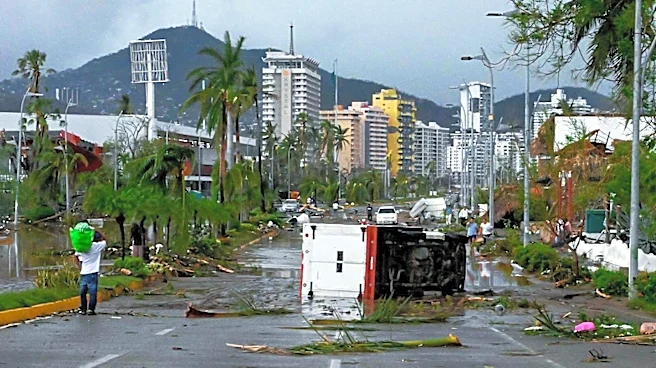
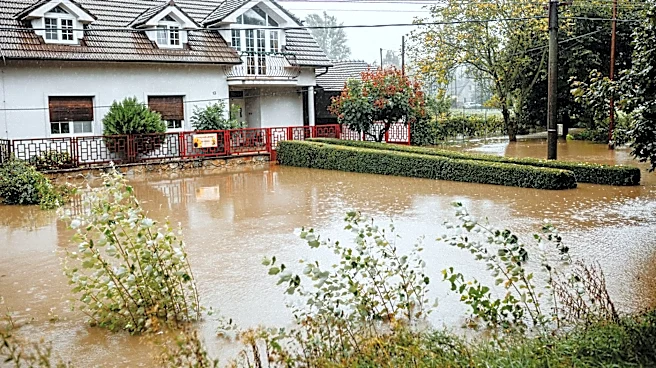
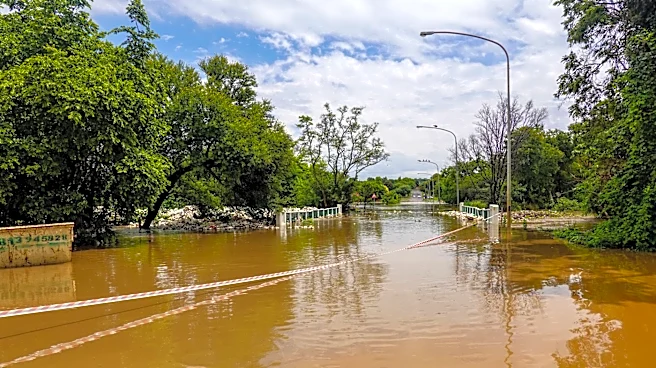
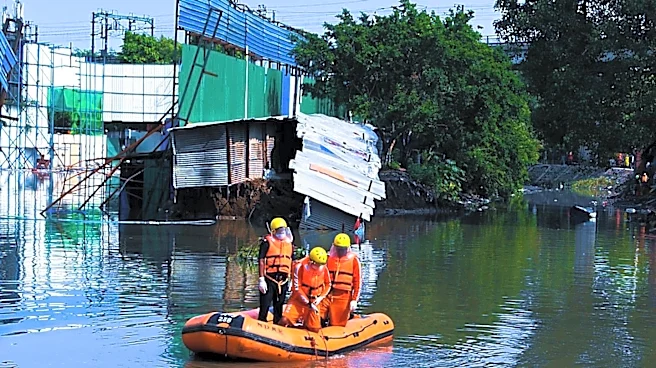
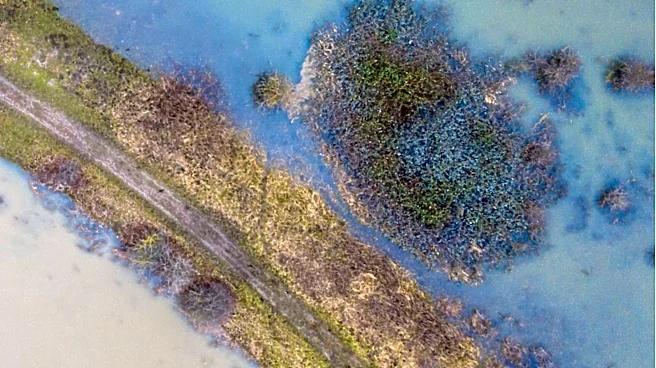
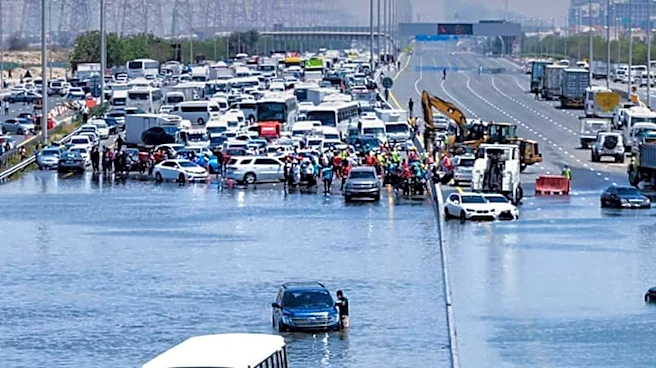
Southern Texas is experiencing severe flash flooding following days of intense rainfall, resulting in at least two fatalities and necessitating hundreds of rescues. The affected areas, which include regions previously hit by last July's floods, are seeing
rivers reach historic levels. Emergency services are actively engaged in rescue operations, particularly in counties such as Sutton, Crockett, and Zavala. The heavy rains have led to significant disruptions, with many residents being evacuated from their homes as water levels continue to rise. The situation remains critical as new flash flood warnings are issued, and cleanup efforts are ongoing in areas where the waters have receded.
Why It's Important?
The flooding in Texas highlights the increasing frequency and severity of extreme weather events, which pose significant challenges to infrastructure and emergency response systems. The immediate impact includes loss of life, property damage, and displacement of residents, which can have long-term economic and social consequences. The situation underscores the need for improved flood management and emergency preparedness strategies to mitigate the effects of such natural disasters. Additionally, the recurring nature of these floods raises concerns about climate resilience and the capacity of local governments to protect vulnerable communities.
What's Next?
As the situation develops, continued monitoring of weather patterns and river levels is essential to anticipate further flooding risks. Authorities are likely to focus on enhancing emergency response capabilities and providing support to affected communities. Long-term, there may be discussions on infrastructure improvements and policy changes to better manage flood risks. The response from state and federal agencies will be crucial in addressing both immediate needs and future prevention strategies.