






What's Happening?
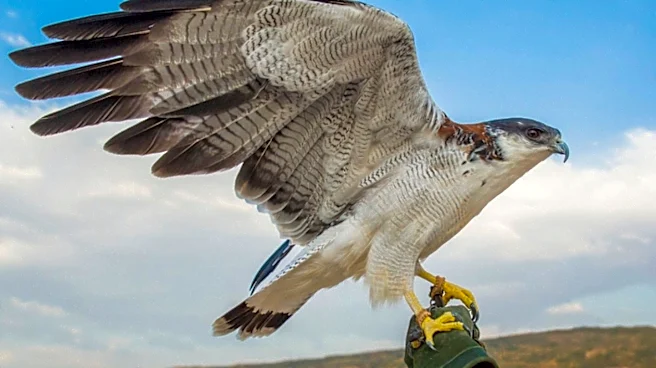
The University of Iowa Raptor Project at Macbride Nature Recreation Area near Solon, Iowa, provides a free family adventure where visitors can observe various raptors up close. The project features a self-guided walk along a trail with enclosures housing
different birds of prey, each accompanied by a sign detailing its story and how it came to be at the facility. Recent visitors encountered a diverse range of raptors, including red-tailed hawks, peregrine falcons, Harris's hawks, several owl species (such as a barred owl, an eastern screech owl, and a Great Horned Owl named Wannago), and a bald eagle named Spirit. Spirit, an ambassador bird since 1985 after a power line collision, has educated thousands of people.
Why It's Important?
This initiative is important as it offers a unique educational opportunity for families in the U.S. to connect with wildlife and learn about raptor conservation. By providing free access, the Iowa Raptor Project makes environmental education accessible to a broader audience, fostering an appreciation for nature and wildlife preservation. The personal stories of the birds, many of whom are at the project due to injuries or illegal pet ownership, highlight the impact of human activities on wildlife and the importance of rehabilitation efforts. Such projects contribute to public awareness about ecological balance and the critical role raptors play in ecosystems, potentially inspiring future generations to engage in conservation.
What's Next?
The Iowa Raptor Project continues to serve as a valuable community resource, with visitors encouraged to explore not only the raptor enclosures but also the surrounding trails leading to Lake Macbride, where they can observe wild birds and fossil deposits. While the experience is free, the project relies on donations to fund the care of the birds and operational costs, indicating a continuous need for community support. The project's success may inspire similar initiatives in other regions, promoting accessible environmental education and wildlife rehabilitation across the U.S. The ongoing engagement with the public through such facilities helps maintain a connection between urban and natural environments.
Beyond the Headlines
Beyond its immediate educational benefits, the Iowa Raptor Project embodies a deeper commitment to environmental stewardship and community engagement. The presence of ambassador birds like Spirit and Wannago, each with a compelling backstory, transforms abstract conservation concepts into tangible, relatable experiences. This hands-on approach to learning about wildlife fosters empathy and a sense of responsibility towards the natural world. The project also highlights the intersection of local natural history, with opportunities to explore fossil deposits, and broader ecological themes. It serves as a model for how local initiatives can contribute significantly to national conservation goals and public understanding of biodiversity.