







What's Happening?
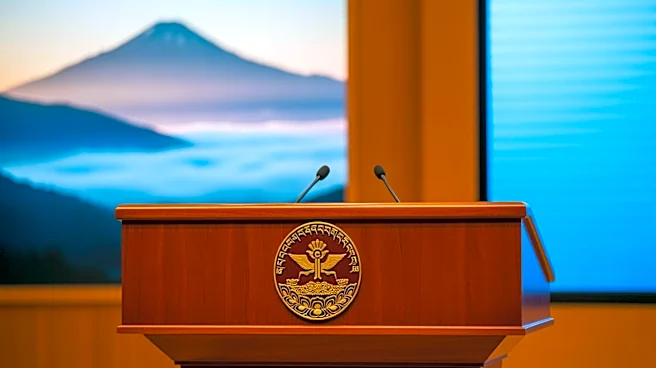
Penpa Tsering has been sworn in for a second term as the president of Tibet's government-in-exile, following his reelection earlier this year. The swearing-in ceremony took place in Dharamshala, India, in the presence of the Dalai Lama. Tsering, who has led
the Central Tibetan Administration since 2021, reaffirmed his commitment to the 'Middle Way Policy,' which seeks a peaceful resolution with China through dialogue. The Tibetan government-in-exile, formed in 1959, continues to advocate for Tibetan autonomy and cultural preservation, despite China's refusal to recognize its legitimacy.
Why It's Important?
Tsering's leadership and the continued advocacy of the Tibetan government-in-exile play a crucial role in maintaining international awareness of the Tibetan cause. The administration's commitment to nonviolence and dialogue underscores its efforts to achieve a peaceful resolution with China, despite ongoing tensions. The situation in Tibet remains a sensitive geopolitical issue, with implications for Sino-Indian relations and international human rights advocacy. Tsering's reelection may strengthen the exile government's position and influence in global discussions on Tibet.
What's Next?
The Central Tibetan Administration will likely continue its diplomatic efforts to engage with international stakeholders and advocate for Tibetan rights. Back-channel communications with China may persist, although significant progress remains uncertain. The administration's activities will be closely monitored by both supporters and critics, as the future of Tibet's autonomy and cultural preservation remains a contentious issue. The Dalai Lama's role and the question of his succession also continue to be significant factors in the broader Tibetan struggle.