






What's Happening?
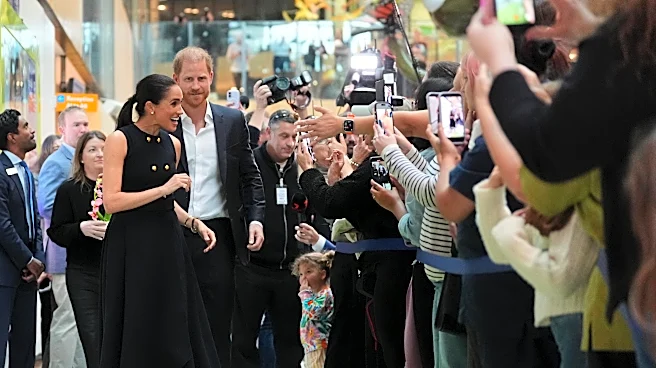
Prince Harry and Meghan Markle have embarked on a tour in Australia, which has drawn criticism for allegedly mimicking traditional royal duties despite their previous decision to step back from such roles. The tour, which includes both philanthropic and commercial
engagements, has been seen by some as a contradiction to their earlier stance of leaving royal duties behind. Critics argue that their actions reflect the concerns of the late Queen Elizabeth II, who had hoped to prevent such a 'half-in, half-out' approach to royal responsibilities. The couple's activities, including Meghan Markle's appearance on a cooking show, have been met with mixed reactions, with some viewing it as an attempt to maintain public visibility.
Why It's Important?
The tour highlights ongoing tensions between the couple's public persona and their stated desire for privacy. It raises questions about the boundaries between public duty and private enterprise, especially for figures who have stepped back from official roles. The situation underscores the challenges faced by public figures in balancing personal and professional lives, particularly when their actions are scrutinized through the lens of their former roles. The controversy also reflects broader discussions about the role of modern royalty and the expectations placed on those who have chosen to leave traditional duties behind.
What's Next?
While the tour continues, it remains to be seen how the couple will navigate the criticism and whether they will adjust their public engagements in response. The reactions from both the public and royal circles could influence future decisions regarding their roles and activities. Additionally, the ongoing scrutiny may impact their relationship with the British royal family and their public image. Observers will be watching to see if King Charles III or other royal family members will respond to the situation, particularly regarding the couple's use of royal titles and their public engagements.
Beyond the Headlines
The tour and its reception may have long-term implications for how former royals engage with the public and manage their personal brands. It raises ethical questions about the use of royal status for personal gain and the responsibilities that come with public life. The situation also highlights cultural differences in how royalty is perceived and the expectations of public figures in different countries. As the couple continues to navigate their roles outside the traditional royal framework, their actions may set precedents for future generations of royals who choose to step back from official duties.