



What's Happening?
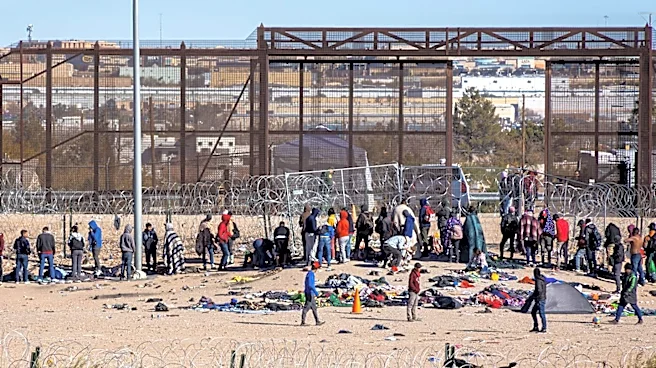
New surveys conducted in 11 competitive U.S. states and 28 congressional districts reveal significant bipartisan agreement on immigration reform proposals. Majorities of both Democrats and Republicans favor offering legal status to undocumented immigrants
who have resided in the U.S. for years without committing crimes, provided they pay penalties and owed taxes. This support extends to providing a pathway to citizenship for individuals brought to the U.S. illegally as children. Conversely, large bipartisan majorities advocate for the deportation of undocumented immigrants convicted of crimes. To deter illegal immigration for work, the surveys indicate support for requiring employers to use E-Verify to confirm legal status and increasing the number of work visas to meet labor demands. Additionally, there is strong bipartisan consensus on hiring more immigration court judges and staff to expedite asylum claim evaluations, aiming to reduce the current multi-year waiting periods for asylum seekers.
Why It's Important?
This bipartisan consensus, particularly in politically competitive areas, suggests a potential shift in the highly polarized U.S. immigration debate. The findings indicate public support for pragmatic solutions that balance enforcement with humanitarian considerations. Implementing proposals such as increased work visas and expedited asylum processing could address critical labor shortages and alleviate the strain on the immigration system. A pathway to legal status for long-term undocumented residents could integrate a significant portion of the workforce into the formal economy, potentially increasing tax revenues and reducing the shadow economy. Conversely, the strong support for deporting criminal undocumented immigrants reflects a public desire for maintaining law and order. The emphasis on E-Verify and increased work visas aims to channel economic migration through legal avenues, which could benefit businesses by providing a stable and legal workforce while reducing incentives for illegal entry.
What's Next?
The proposals highlighted in these surveys are derived from existing Congressional legislation, indicating that there are already frameworks in place for potential action. The University of Maryland's Program for Public Consultation (PPC), which conducted the surveys, plans to release additional findings on various policy questions leading up to the November elections. This ongoing research aims to inform the public, policymakers, and candidates about areas of bipartisan common ground. Political leaders may use these findings to craft or support legislation that aligns with public sentiment, potentially leading to renewed efforts for comprehensive immigration reform. The focus on increasing immigration judges and staff suggests that administrative changes to improve the efficiency of the asylum system could be prioritized, regardless of broader legislative overhauls.
Beyond the Headlines
The surveys challenge the prevailing narrative of deep division on immigration, revealing a public desire for nuanced solutions beyond mass deportation. The emphasis on integrating long-term undocumented residents who have not committed crimes into society, coupled with stricter enforcement against criminals, reflects a complex moral and ethical landscape. This approach acknowledges the human element of immigration while seeking to uphold the rule of law. The call for increased work visas and expedited asylum processing also touches upon the economic and social integration of immigrants, recognizing their potential contributions to the U.S. economy and society. The findings suggest a public yearning for a more functional and equitable immigration system that addresses both economic needs and humanitarian concerns, moving beyond purely punitive or purely open-border approaches.