
What's Happening?
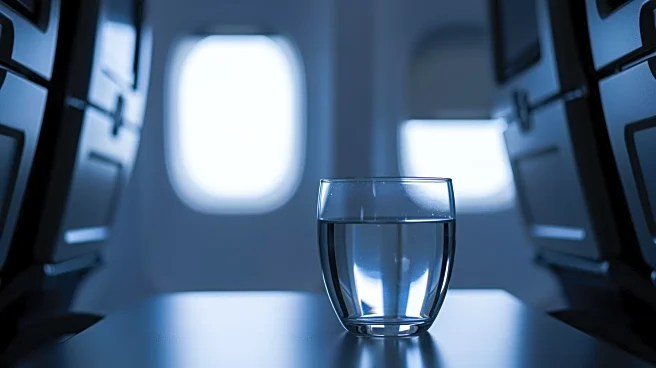
A new report from the Center for Food as Medicine and Longevity has raised concerns about the quality of water used on airplanes. The 2026 Airline Water Study evaluated water samples from 10 major and 11
regional airlines over a three-year period, assigning each a 'Water Safety Score.' Delta Air Lines and Frontier Airlines received the highest scores, indicating relatively safe water, while other airlines showed potential safety issues. The study found that 949 out of 35,674 samples tested positive for coliform bacteria, and 32 E.coli violations were detected. These findings suggest that the water used for in-flight beverages like coffee and tea may not meet safety standards, posing health risks to passengers.
Why It's Important?
The report highlights significant public health concerns regarding the safety of in-flight water, which is used in preparing beverages consumed by millions of passengers annually. The presence of bacteria such as E.coli in airline water can lead to serious health issues, including gastrointestinal illnesses. This situation underscores the need for stricter enforcement of the Environmental Protection Agency's Aircraft Drinking Water Rule and improved water quality monitoring by airlines. The findings may prompt passengers to reconsider consuming in-flight beverages and encourage airlines to adopt better water safety practices to protect consumer health.
What's Next?
In response to the report, airlines may face increased scrutiny from regulatory bodies and pressure to enhance their water safety protocols. Passengers might opt to bring their own beverages on flights, potentially affecting in-flight service dynamics. Airlines could be prompted to invest in more frequent cleaning and maintenance of water tanks and to ensure compliance with safety standards. The report may also lead to policy discussions on improving water safety regulations for the airline industry, aiming to prevent health risks associated with contaminated water.