





What's Happening?
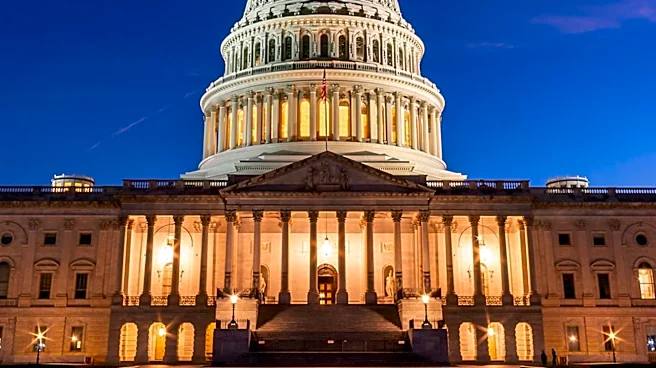
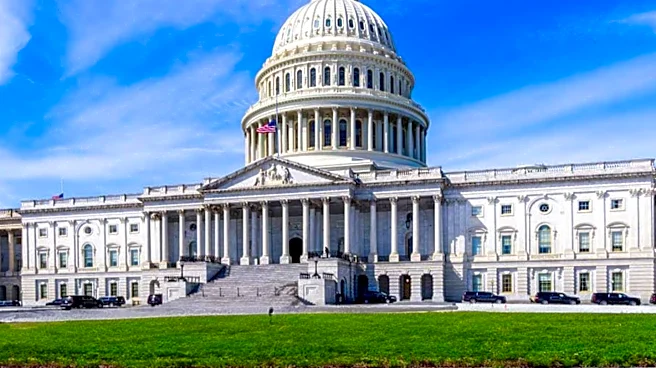
The U.S. House of Representatives has passed a resolution condemning socialism "in all its forms" for the third time in four years. This latest resolution, approved by a narrow margin of 220 to 192, specifically targets the Democratic Socialists of America
(DSA) and asserts that the ideology of the DSA and socialism are incompatible with American values and the U.S. Constitution. While Republicans unanimously supported the resolution (212-0), the majority of Democrats opposed it (192-8). Eight Democrats, including Kathy Castor and Darren Soto of Florida, Henry Cuellar and Vicente González of Texas, Jared Golden of Maine, Gabe Vásquez of New Mexico, Marie Gluesenkamp Pérez of Oregon, and Donald Davis of North Carolina, voted in favor of the resolution, which also included praise for President Trump and his SAVE America Act.
Why It's Important?
This resolution is significant as it highlights the ongoing ideological battle within U.S. politics and the Republican Party's strategy to frame the Democratic Party as aligned with socialist ideals, particularly ahead of the midterm elections. The inclusion of praise for President Trump and his SAVE America Act was a deliberate move to ensure most Democrats would vote against it, providing campaign material to portray the Democratic Party as a 'communist front.' The narrow passage of the resolution, with a significant number of Democrats opposing it, underscores the deep partisan divisions in Congress. The vote by eight Democrats in favor, particularly those from the party's right wing, indicates internal ideological rifts within the Democratic caucus and could have implications for party unity and future legislative efforts. This move also reflects a broader concern within the capitalist political class about growing support for socialist ideas among the working class and youth.
What's Next?
The passage of this resolution is expected to serve as ammunition for Republican campaign advertisements in the lead-up to the midterm elections, aiming to link the Democratic Party with socialism and President Trump's agenda. The Democratic Party will likely need to counter these narratives, emphasizing their mainstream positions and distinguishing themselves from the more radical elements of the left. The eight Democrats who voted in favor of the resolution may face scrutiny from their party's leadership and progressive constituents, potentially impacting their standing within the caucus or their own reelection campaigns. This vote also signals a continued focus on ideological purity tests in Congress, which could make bipartisan cooperation on critical issues even more challenging. The resolution's impact on public perception of socialism and the Democratic Party will be closely monitored as the election cycle progresses.
Beyond the Headlines
Beyond its immediate electoral implications, this resolution reflects a deeper anxiety within the U.S. political establishment regarding the perceived rise of socialist sentiment. The focus on the DSA, despite its relatively limited political power, suggests that the ruling class views any shift towards anti-capitalist ideas as a potential threat to the existing economic and political order. The resolution's attempt to conflate democratic socialism with more extreme forms of socialism, and to link it to President Trump's agenda, is a tactic to discredit progressive movements and maintain the status quo. This ideological battle is not merely about political labels but about fundamental questions of economic justice, social welfare, and the role of government, which are becoming increasingly central to American political discourse amidst growing economic inequality and social unrest. The resolution's failure to gain broad Democratic support, despite its anti-socialist stance, also indicates a growing comfort with the term 'socialism' among a segment of the Democratic base.