



What's Happening?
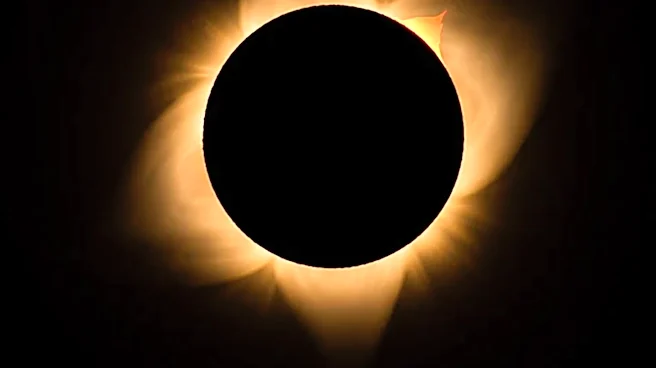
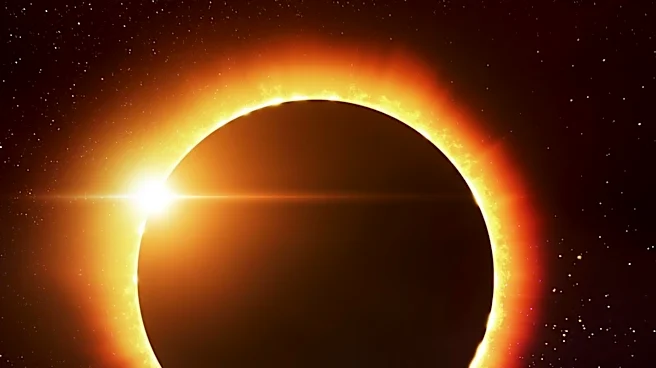
A partial solar eclipse is set to occur on August 12, 2026, offering viewing opportunities across various parts of the United States. The eclipse will be visible in states from Alaska to North Carolina, with the highest coverage in Fairbanks, Alaska,
at 37%. NASA will provide a live broadcast of the event, which will also be visible in parts of Europe and northwestern Africa. The eclipse will not completely block the sun, making it a partial eclipse for most viewers.
Why It's Important?
Solar eclipses are significant astronomical events that attract interest from scientists and the general public alike. They provide opportunities for educational outreach and public engagement in science. The event also highlights the importance of eye safety when viewing solar phenomena, as direct observation without proper protection can cause eye damage. The widespread visibility of this eclipse across the U.S. allows for broad participation and interest in astronomy.
What's Next?
NASA's live broadcast will begin at 1:15 p.m. ET on August 12, providing coverage and commentary on the eclipse. Viewers are encouraged to use proper eye protection or indirect viewing methods to safely observe the event. The eclipse may inspire educational programs and activities in schools and communities, fostering interest in science and astronomy.