







What's Happening?
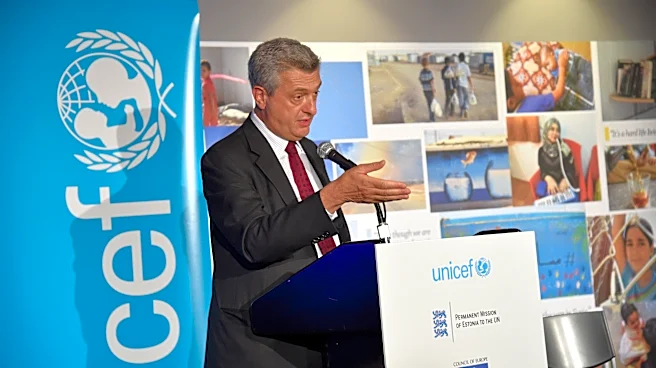
The Council of Europe’s Commissioner for Human Rights, Michael O’Flaherty, has issued new guidance for governments considering external migration cooperation, including return hubs and border control partnerships. This guidance, presented as a self-assessment
tool, urges states to conduct comprehensive human-rights risk assessments and develop mitigation strategies before entering into such agreements. O’Flaherty emphasizes that if states cannot guarantee protection from refoulement, arbitrary detention, ill-treatment, or denial of asylum, they should abandon their plans. This intervention comes as several European states explore shifting asylum or return procedures outside their territory and as the EU’s border system, centered on Frontex operations, increasingly focuses on enforcement and returns.
Why It's Important?
This guidance from the Council of Europe is critical because it addresses the significant human rights risks associated with Europe's growing trend of externalizing migration policies. As EU member states increasingly seek to manage migration beyond their borders, there is a heightened danger of exposing vulnerable individuals to human rights violations, including arbitrary detention, torture, and denial of asylum. The Commissioner's call for a precautionary approach and robust safeguards highlights the imperative for states to uphold their international human rights obligations, even when outsourcing migration management. Without such measures, these policies could undermine fundamental rights, create legal vacuums, and lead to severe humanitarian consequences, impacting the lives of countless migrants and asylum seekers.
What's Next?
The new guidance will serve as a framework for European governments to evaluate their external migration cooperation arrangements, both existing and proposed. States are now expected to demonstrate that their policies comply with human rights obligations, with a strong emphasis on transparency, independent monitoring, and accountability. The European Commission's proposal to make Frontex the EU’s central returns agency, with expanded powers and a greater role beyond Europe’s borders, will likely face increased scrutiny in light of this guidance. Rights groups, including Amnesty International, have already warned that Frontex’s expanded enforcement and deportation powers lack matching safeguards. The effectiveness of this guidance will depend on the political will of member states to integrate human rights considerations into their migration policies and to ensure robust oversight mechanisms are in place.
Beyond the Headlines
The externalization of migration policies by European states raises profound ethical and legal questions about the responsibility of nations to protect human rights beyond their territorial borders. By outsourcing border control and asylum processing, states risk creating a system where accountability becomes diffuse, and vulnerable individuals are subjected to conditions that would be unacceptable within their own jurisdictions. This approach can lead to a 'race to the bottom' in human rights standards, as countries seek to offload their responsibilities to third countries with weaker protections. The Council of Europe's intervention is a crucial step towards reasserting the universality of human rights and ensuring that economic or political expediency does not override fundamental humanitarian principles. It challenges the notion that migration management can be effectively separated from human rights considerations, urging a more holistic and ethical approach to global migration challenges.