


What's Happening?
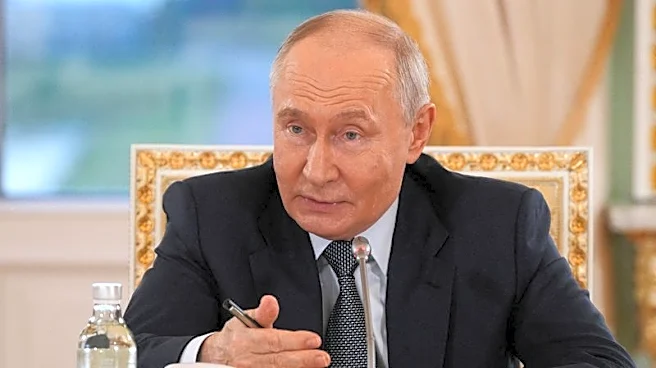
Ukrainian President Volodymyr Zelensky has extended an open invitation to Russian President Vladimir Putin for a face-to-face meeting in a neutral country to discuss ending the ongoing conflict between their nations. This proposal comes as Ukraine demonstrates
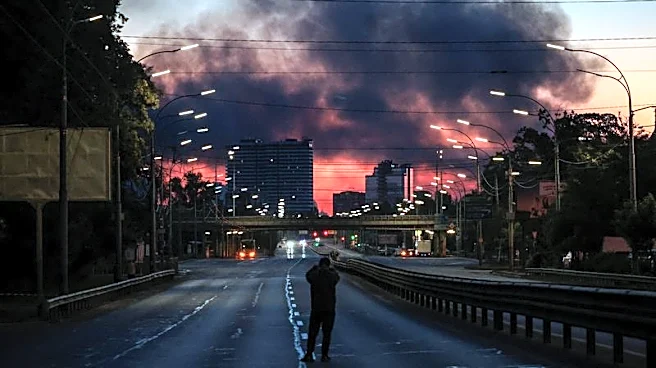
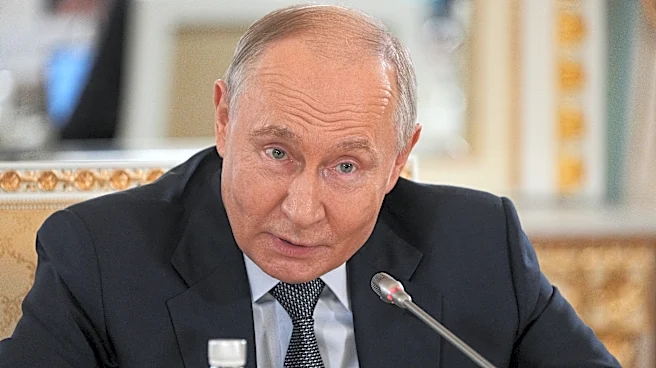
its military capabilities by striking deep into Russian territory, including a recent drone attack on St. Petersburg. Zelensky's letter suggests potential meeting locations such as Switzerland, Turkey, or an Arab country, emphasizing the need for direct engagement to halt the war. Meanwhile, Russian President Putin maintains that Russian forces are advancing and insists that any peace deal must include assurances allegedly made by President Trump during a previous summit in Alaska. The conflict, now in its fifth year, continues with both sides experiencing significant military actions and losses.
Why It's Important?
The proposal for a ceasefire and direct negotiations between Ukraine and Russia could mark a significant turning point in the conflict, potentially leading to a de-escalation of hostilities. For Ukraine, achieving a ceasefire would provide much-needed relief from ongoing military pressures and allow for humanitarian efforts to address the war's impact on civilians. For Russia, engaging in talks could alleviate international sanctions and improve its global standing. The involvement of President Trump in previous discussions adds a layer of complexity, as Ukraine has stated it is not bound by any agreements made without its participation. The outcome of these proposed talks could influence regional stability and have broader implications for international relations and security.
What's Next?
If President Putin accepts Zelensky's proposal, the next steps would involve organizing a meeting in a mutually agreed-upon neutral location. This could lead to a temporary ceasefire during negotiations, providing a window for diplomatic efforts to resolve the conflict. The international community, including the United States and European allies, may play a role in facilitating or supporting these talks. However, the success of such negotiations will depend on both parties' willingness to compromise and address key issues, such as territorial disputes and security guarantees. The response from major stakeholders, including NATO and the European Union, will be crucial in shaping the future of the region.
Beyond the Headlines
The ongoing conflict has broader implications beyond the immediate military engagements. It highlights the geopolitical tensions between Russia and Western nations, with Ukraine caught in the middle. The war has also underscored the importance of military alliances and the role of international diplomacy in conflict resolution. Additionally, the conflict has had significant humanitarian consequences, with millions displaced and infrastructure damaged. The potential for a ceasefire and negotiations offers a glimmer of hope for peace, but it also raises questions about the long-term stability of the region and the future of Ukraine's sovereignty and territorial integrity.