




What's Happening?
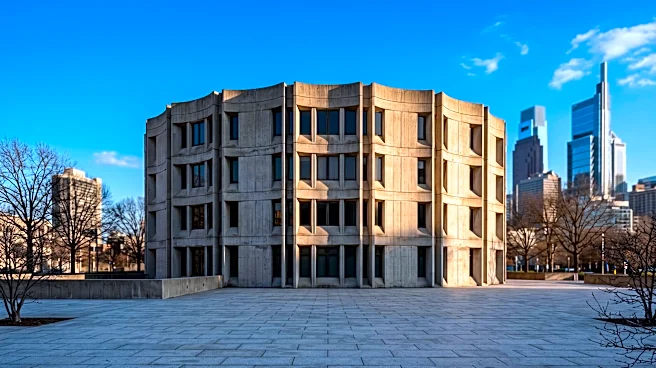
Four years after the Philadelphia Police Department (PPD) vacated its former headquarters, known as the 'Roundhouse,' the city still has no apparent redevelopment plans for the property. The building is one of several city-owned properties located on prime
real estate that currently sit empty. KYW Newsradio's City Hall bureau chief Pat Loeb reported that despite the lack of a concrete plan, two separate efforts have explored possibilities for the building's reuse. The continued vacancy of such a significant property in a key urban location raises questions about the city's long-term planning and asset management strategies. The 'Roundhouse' has been a prominent fixture in Philadelphia's civic landscape, and its disuse represents a missed opportunity for urban revitalization.
Why It's Important?
The absence of redevelopment plans for the former PPD headquarters is significant for several reasons. Firstly, it represents a substantial economic opportunity cost for Philadelphia. Prime real estate, especially in an urban core, could generate significant tax revenue, create jobs, and stimulate local businesses if redeveloped. Secondly, the prolonged vacancy of a large, centrally located building can contribute to urban blight and detract from the city's aesthetic and functional appeal. This can negatively impact property values in the surrounding areas and discourage further investment. Thirdly, it highlights potential inefficiencies or bureaucratic hurdles within city government regarding property management and urban planning. The inability to move forward with a plan suggests challenges in decision-making, funding, or stakeholder consensus, which could affect other city-owned assets and future development projects.
What's Next?
The city of Philadelphia will likely face continued pressure from community groups, urban planners, and potential developers to address the vacant 'Roundhouse' property. Future steps could involve the city re-evaluating its options, potentially issuing new requests for proposals (RFPs) to solicit development ideas, or engaging in public-private partnerships. There may be renewed efforts to conduct feasibility studies or community engagement sessions to gather input on potential uses for the site. The two previously explored reuse possibilities might be revisited or new ones considered. The long-term goal would be to transform the empty building into a productive asset that contributes to the city's economic and social fabric, whether through commercial, residential, or mixed-use development.
Beyond the Headlines
The ongoing vacancy of the 'Roundhouse' reflects a broader challenge faced by many U.S. cities: how to effectively manage and repurpose large, often historic, public buildings that are no longer fit for their original purpose. This situation can spark debates about urban heritage preservation versus modern development needs, the role of public assets in driving economic growth, and the transparency and efficiency of municipal planning processes. The 'Roundhouse' could become a symbol of either urban stagnation or successful revitalization, depending on the city's future actions. Its fate could set a precedent for how Philadelphia handles other underutilized public properties, influencing urban development policies and community engagement strategies for years to come.