








What's Happening?
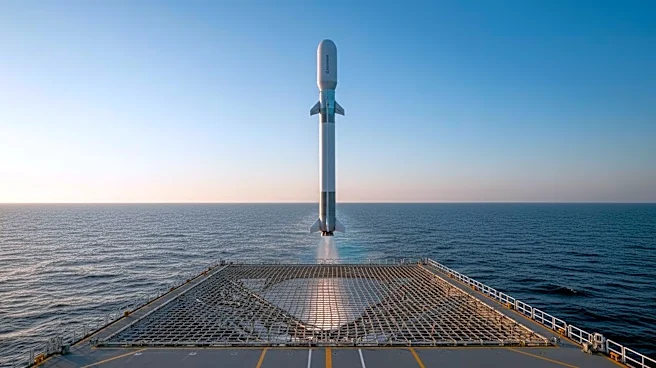
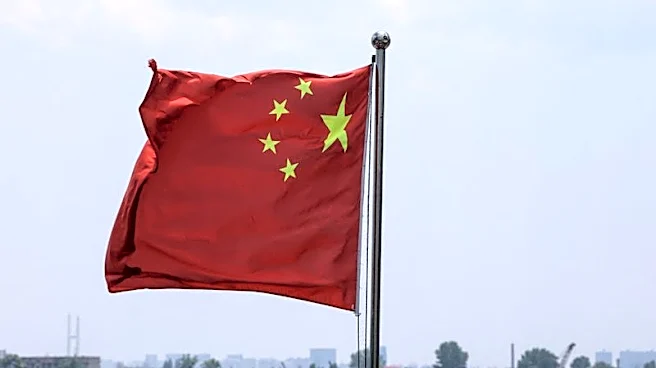
China has achieved a significant milestone in space exploration by successfully landing the booster stage of its Long March-10B reusable rocket. This marks the first time China has launched and partially returned a reusable orbital rocket safely to Earth.
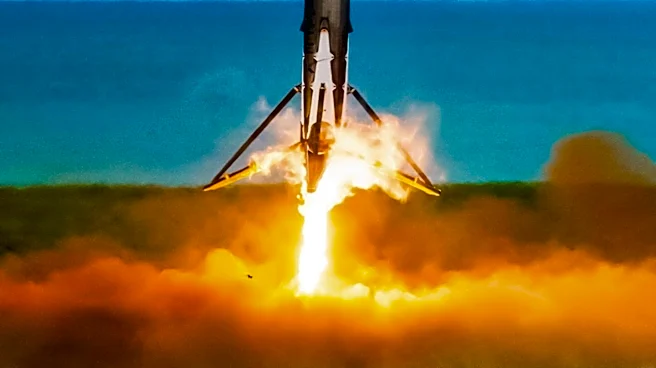
The landing was executed using a net-based recovery system, a world-first achievement. This development places China's Aerospace Science and Technology Corp alongside SpaceX and Blue Origin as the only organizations to have successfully landed a rocket booster. The Long March rocket's first stage touched down on a barge approximately six minutes after launch. This achievement is a crucial step in China's efforts to develop reusable rockets, which are essential for reducing launch costs. SpaceX, led by Elon Musk, has been a pioneer in this field, having landed its first booster in 2015 and continuing to recover its Falcon 9 rockets successfully.
Why It's Important?
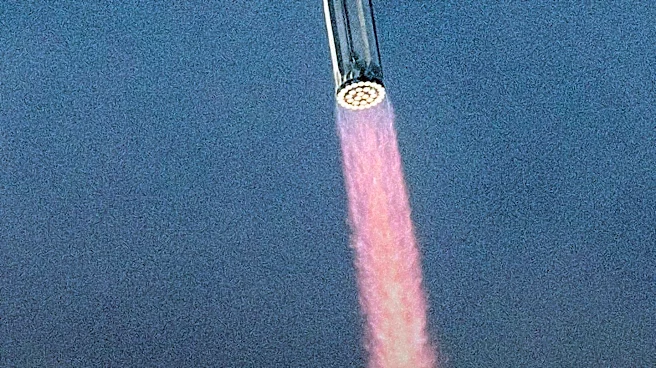
The successful landing of China's reusable rocket represents a significant advancement in the global space race, particularly in the realm of reusable rocket technology. This development could potentially lower the cost of space exploration and satellite deployment, making space more accessible. For the U.S., this poses a competitive challenge as China aims to catch up with SpaceX, which currently dominates the market with its Falcon 9 and Starship rockets. The ability to reuse rockets is a game-changer in the aerospace industry, as it drastically reduces the cost per launch. This could lead to increased competition in the space industry, potentially driving innovation and reducing costs for satellite launches and other space missions.
What's Next?
China's achievement is likely to spur further advancements in its space program, with potential implications for international space collaboration and competition. As China continues to develop its reusable rocket technology, it may seek to expand its presence in the commercial space market, challenging established players like SpaceX. This could lead to increased competition in satellite launches and other space services. Additionally, China's efforts to develop a rival to SpaceX's Starlink satellite internet service indicate its broader ambitions in space technology. The international community will be watching closely to see how these developments unfold and what impact they may have on global space exploration efforts.