







What's Happening?
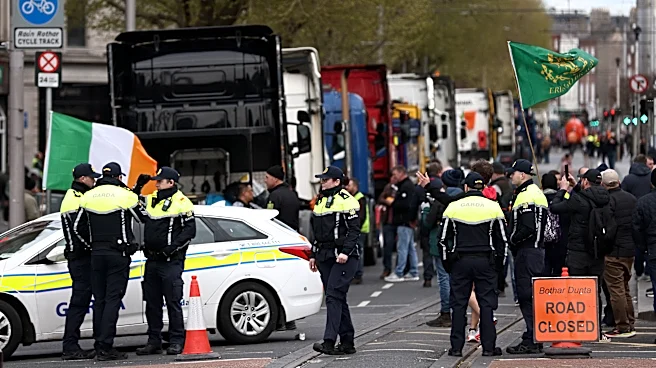
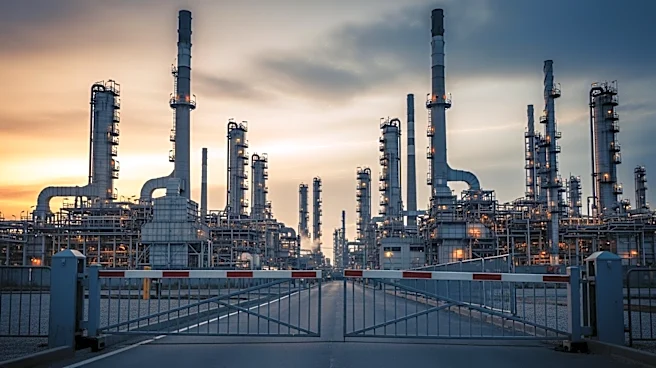
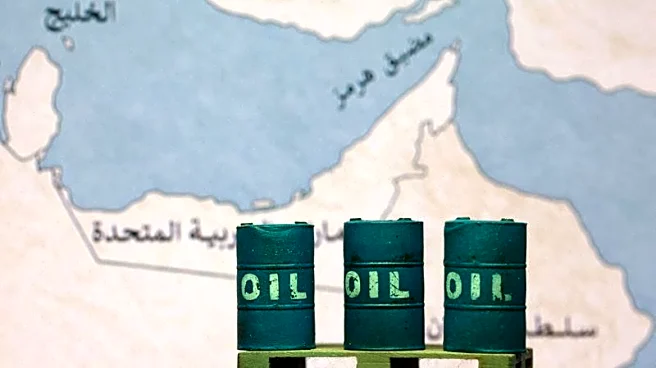
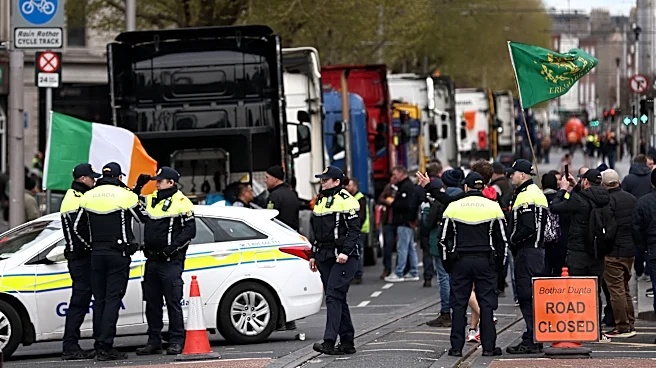
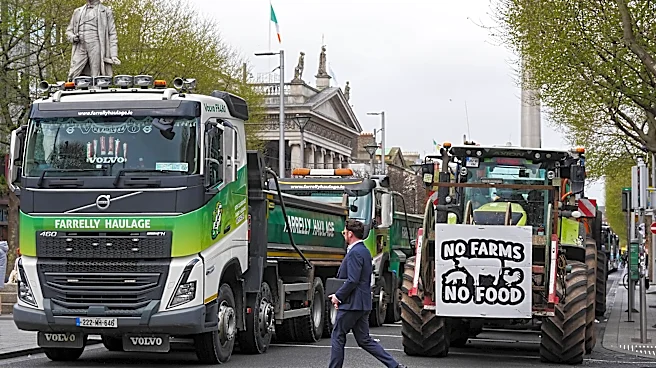
In Dublin, Irish police have dispersed fuel protesters who had been blocking access to vital infrastructure, including the nation's only oil refinery. The protests, driven by soaring fuel costs linked to the U.S.-Israel conflict affecting oil exports,
have caused significant disruptions. Prime Minister Micheál Martin announced a 505 million euro package to alleviate cost-of-living pressures, though it remains uncertain if this will quell the protests. The demonstrations have involved truckers, farmers, and other groups demanding government intervention to lower fuel prices.
Why It's Important?
The protests in Ireland reflect broader global economic challenges, particularly the impact of geopolitical conflicts on fuel prices. The situation underscores the vulnerability of economies to external shocks and the potential for social unrest when essential commodities become unaffordable. The Irish government's response, including proposed tax cuts, highlights the delicate balance policymakers must strike between fiscal responsibility and addressing public grievances. The outcome of these protests could influence future government policies on energy and economic management.