



What's Happening?
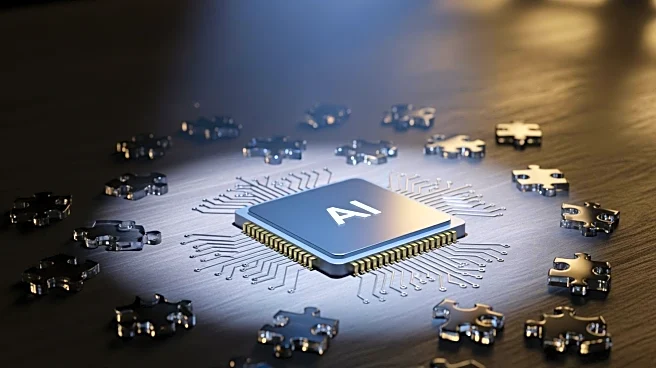
The integration of artificial intelligence (AI) into space exploration is gaining momentum, with a focus on collaboration between AI hardware developers and space agencies. The harsh conditions of space, including extreme temperatures and cosmic radiation,
present unique challenges for AI technology. These conditions necessitate the development of AI hardware that prioritizes longevity, fault tolerance, and radiation hardening over raw computational speed. The European Space Agency and other stakeholders are working to address these challenges by co-designing and testing AI solutions that can withstand the rigors of space. AI's potential applications in space include real-time data processing for Earth observation satellites, autonomous navigation for Mars rovers, and vehicle health monitoring. These advancements could significantly enhance the capabilities of space missions, allowing for more efficient data transmission and improved vehicle autonomy.
Why It's Important?
The collaboration between AI developers and space agencies is crucial for advancing space exploration technologies. AI has the potential to revolutionize how space missions are conducted by enabling autonomous operations and real-time data analysis. This could lead to more efficient use of resources and faster response times in critical situations, such as weather emergencies. The development of AI hardware that can operate in space's harsh environment is essential for the success of future missions. This collaboration also highlights the importance of public-private partnerships in driving innovation and ensuring the long-term sustainability of space exploration efforts. By investing in AI technologies, space agencies can enhance their capabilities and reduce the risks associated with space missions.
What's Next?
The next steps involve continued collaboration between AI hardware developers and space agencies to refine and test AI solutions for space applications. This includes developing hardware that can withstand the unique challenges of space, such as radiation and extreme temperatures. As AI technology advances, it is expected that more sophisticated AI systems will be deployed in space missions, enhancing their autonomy and efficiency. The focus will also be on ensuring the reliability and longevity of AI hardware, as well as maintaining a robust supply chain for these components. This ongoing collaboration will be critical in unlocking the full potential of AI in space exploration.
Beyond the Headlines
The integration of AI into space exploration raises important ethical and legal considerations. As AI systems become more autonomous, questions about accountability and decision-making in space missions will need to be addressed. Additionally, the development of AI technologies for space has implications for national security and international cooperation. Ensuring that AI is used responsibly and ethically in space exploration will be a key challenge for stakeholders. Furthermore, the success of AI in space could drive broader adoption of AI technologies in other industries, highlighting the interconnectedness of technological advancements across sectors.