








What's Happening?
Amazon has initiated the Colorado River Basin Collaborative, a new effort aimed at funding water conservation projects across the Colorado River Basin. The company has committed $20 million towards a goal of raising $100 million over the next two years
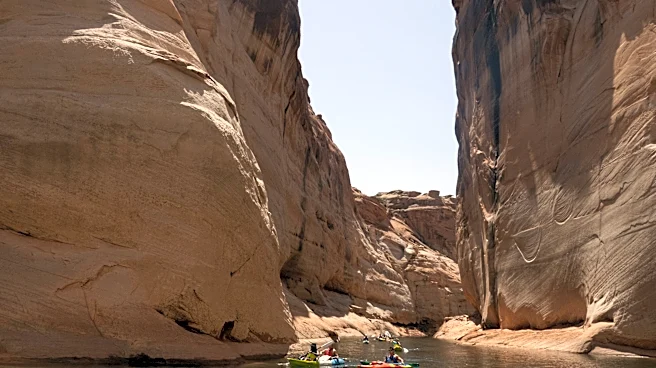
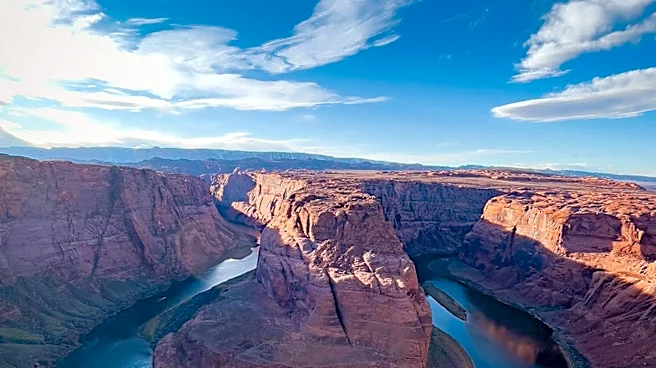
from various organizations. This initiative seeks to address the severe water shortage in the basin, which has seen its largest reservoirs fall below 30% capacity after 25 years of megadrought. The gap between water supply and demand in the region is estimated at approximately 1 trillion gallons per year. Will Hewes, Amazon’s water sustainability lead, emphasized that solving this crisis requires a collective industry-wide effort. In addition to the collaborative, Amazon is investing $2.4 million in an Arizona irrigation efficiency project. This project, in partnership with agricultural technology company Arable, will implement an irrigation management tool for tribal farmland in the Lower Colorado River Basin. The tool, powered by Amazon Web Services (AWS) sensors, provides farmers with real-time data on crop water needs, aiming to reduce water usage by about 20% and save an estimated 238 million gallons of water annually.
Why It's Important?
The Colorado River Basin Collaborative is a significant private-sector response to a critical environmental and economic challenge in the U.S. The Colorado River supports 40 million people and irrigates over 5 million acres of farmland, making its water supply vital for communities and agricultural industries across multiple states. The ongoing megadrought and the widening gap between water supply and demand pose substantial risks to regional stability, food production, and economic development. Amazon's involvement, particularly its substantial financial contribution and leadership in forming a collaborative, signals a growing recognition among major corporations of their role in addressing large-scale environmental issues. The investment in irrigation efficiency technology, specifically for tribal farmland, highlights an effort to support sustainable agricultural practices and potentially mitigate the impact of water scarcity on vulnerable communities. This initiative could set a precedent for other corporations to engage in similar large-scale environmental stewardship, fostering a more sustainable approach to resource management in critical U.S. regions.
What's Next?
The Colorado River Basin Collaborative aims to raise an additional $68 million from other organizations within the next two years to reach its $100 million target. The Water Resilience Coalition will play a crucial role in vetting proposed projects, tracking their results, and attracting new funders to the initiative. This structured approach suggests a sustained effort to identify and support effective water conservation strategies. The Arizona irrigation efficiency project, with its AWS-powered sensors, will continue its implementation on tribal farmland, with ongoing monitoring to confirm the projected 20% reduction in water use and the annual saving of 238 million gallons. Success in this pilot project could lead to broader adoption of similar agricultural technologies across the basin. The collaborative's progress will likely be watched by other corporations and environmental groups, potentially influencing future private-sector investments in water conservation and resilience efforts across the U.S.
Beyond the Headlines
This initiative underscores a broader trend of corporations engaging in environmental sustainability efforts, moving beyond traditional corporate social responsibility to direct investment in critical infrastructure and resource management. Amazon's decision to focus on the Colorado River Basin reflects the direct impact of environmental challenges on business operations and supply chains, as the company has significant operations and customers throughout the region. The use of AWS-powered sensors in agricultural irrigation also highlights the increasing integration of technology and data analytics into environmental solutions, transforming how natural resources are managed. This approach could lead to more efficient and data-driven conservation efforts, potentially shifting the paradigm from reactive crisis management to proactive, technology-enabled stewardship. Furthermore, the emphasis on tribal farmland in the Arizona project points to a recognition of the disproportionate impact of environmental issues on indigenous communities and the importance of inclusive solutions in conservation efforts.