



What's Happening?
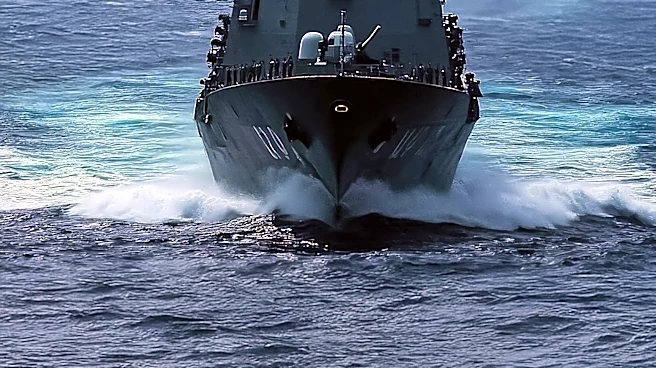
The People's Liberation Army (PLA) has significantly increased its naval and air activities around Taiwan, with a think tank suggesting these operations simulate an encirclement and isolation of the region. In early November, both the Liaoning and Fujian
aircraft carriers were active at sea simultaneously. Taiwan's security department head, Wu Chao-hsieh, reported over 100 Chinese Navy and China Coast Guard vessels in the Western Pacific on November 3, a figure Taiwan publicly stated but remains unverified by independent sources. The Institute for the Study of War (ISW) interprets these deployments, combined with satellite imagery and open-source information, as a large-scale military operation without a public exercise name. The Liaoning carrier group has been conducting drills in the distant Western Pacific, transiting through the Miyako Strait and Basilan Strait. The Fujian carrier, which entered service a year ago, has completed cross-sea-area test training, demonstrating its ability to operate in distant waters. The ISW notes that major surface forces from three coastal theater commands are participating in far-seas operations simultaneously, which is uncommon. Additionally, Taiwan detected 49 PLA aircraft sorties, with 31 entering its air defense identification zone, potentially coordinating with the vessel deployments.
Why It's Important?
The intensified PLA activity around Taiwan carries significant implications for regional stability and international security. The ISW's assessment of a simulated encirclement suggests a shift in China's potential operational tactics, moving beyond traditional exercises to demonstrate a capability for rapid transition from routine deployment to military operations without prior announcement. This 'missing codename' approach could complicate early warning and response efforts for Taiwan and its allies, including the United States. The deployment of two aircraft carriers simultaneously, even if not operating in concert, signals China's growing naval power projection capabilities. This sustained pressure could contribute to a 'gray-zone' strategy, aiming to normalize a high level of military presence around Taiwan and gradually erode its sense of security and international space. For the U.S. and its allies, this development necessitates a re-evaluation of defense strategies in the Indo-Pacific, focusing not just on the outbreak of conflict but also on managing persistent coercive pressure and potential isolation scenarios.
What's Next?
The ongoing PLA activities suggest a continued focus on developing and demonstrating capabilities for potential Taiwan contingencies. The Fujian carrier is expected to transition from forming basic combat capability to fully forming it by 2026, indicating further advancements in China's naval power. The lack of a public exercise name for current operations may become a recurring feature, challenging traditional intelligence gathering and diplomatic responses. Stakeholders, including Taiwan, the United States, and regional partners like Japan and Australia, will likely continue to monitor these developments closely. Taiwan will likely maintain its heightened state of alert and continue to report incursions. The U.S. and its allies may increase intelligence sharing and joint exercises to counter these evolving tactics. The analytical framework for assessing the Taiwan Strait situation is shifting from conflict outbreak to gray-zone pressure, suggesting that future responses will need to address a broader spectrum of coercive actions rather than just overt military aggression.
Beyond the Headlines
The PLA's current posture around Taiwan highlights a deeper strategic shift in Beijing's approach to reunification. By potentially simulating isolation without explicit declarations, China is testing the boundaries of international response and aiming to establish new norms of military presence. This 'no codename' strategy could be interpreted as a deliberate ambiguity designed to keep adversaries guessing about intentions and escalation thresholds. Ethically, it raises questions about the responsibility of major powers to clearly signal military intentions to prevent miscalculation. Legally, such actions, while not direct acts of war, push the limits of international law regarding freedom of navigation and sovereignty in contested areas. Culturally, the sustained pressure aims to instill a sense of inevitability or hopelessness in Taiwan, potentially influencing public opinion and political discourse. This long-term strategy of incremental pressure and capability demonstration could fundamentally alter the geopolitical landscape of the Indo-Pacific, demanding a more nuanced and adaptive response from the international community.