
What's Happening?
Finance ministers from nearly a dozen countries, led by Britain, have urged the U.S., Israel, and Iran to fully implement a ceasefire in the ongoing conflict. The ministers issued a joint statement during
the IMF and World Bank spring meetings, highlighting the war's detrimental effects on the global economy and markets. They warned that even with a resolution, the conflict's impacts on growth, inflation, and markets would persist. The statement also called for avoiding protectionist measures that could further disrupt global supply chains.
Why It's Important?
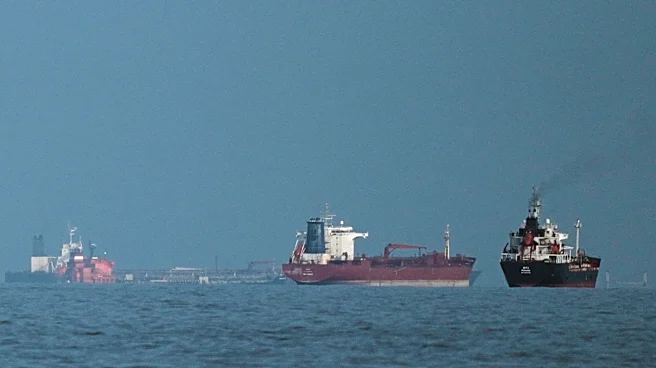
The call for a ceasefire underscores the significant economic risks posed by the Iran conflict, which has already led to a downgrade in global economic growth forecasts. The war threatens energy security and supply chains, particularly in the Strait of Hormuz, a critical chokepoint for global oil shipments. Prolonged hostilities could exacerbate inflation and financial instability, affecting economies worldwide. The ministers' appeal reflects a growing consensus on the need for diplomatic solutions to mitigate economic fallout.
What's Next?
The international community will likely continue diplomatic efforts to secure a lasting ceasefire and address the underlying issues fueling the conflict. The situation remains fluid, with potential for renewed hostilities or escalation. Economic stakeholders will monitor developments closely, as any disruption in the region could have far-reaching consequences for global markets. Policymakers may also explore measures to bolster economic resilience and support affected industries.