



What's Happening?
As the first wave of Baby Boomers turns 80, they hold a significant portion of U.S. wealth, controlling over half of all household assets, valued at approximately $82 trillion. This generation benefited from favorable economic conditions, including postwar
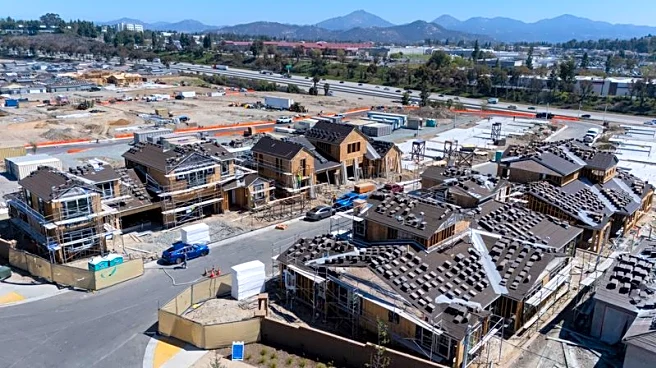
wage expansion, accessible homeownership, and affordable education, which allowed them to accumulate substantial wealth. However, as Boomers age, they face rising healthcare costs and the challenge of managing their assets in retirement. The concentration of wealth in housing, coupled with the tendency to age in place, has created market bottlenecks, limiting housing availability for younger generations.
Why It's Important?
The aging of Baby Boomers and their control of significant wealth have broad implications for the U.S. economy and younger generations. As Boomers hold onto valuable properties, housing supply remains tight, driving up prices and making homeownership less accessible for younger buyers. Additionally, the anticipated 'great wealth transfer' may not materialize as expected, as healthcare and caregiving costs could deplete much of the Boomers' wealth before it is passed on. This situation could exacerbate economic inequality and limit opportunities for Gen X, Millennials, and Gen Z, who already face challenges such as student debt and slower income growth.
What's Next?
In the coming years, the transfer of Boomer wealth is expected to occur gradually, primarily through estate settlements and the sale of homes to cover healthcare costs. This process may eventually ease housing supply constraints, potentially reshaping regional markets. However, the financial burden of long-term care and healthcare expenses may reduce the net inheritance for many families, challenging the notion that the wealth transfer will significantly reduce economic disparities. Policymakers and financial planners may need to address these issues to support both aging Boomers and younger generations.
Beyond the Headlines
The cultural and economic shifts associated with the aging Boomer generation highlight the need for a reevaluation of retirement and healthcare policies. As Boomers live longer, the strain on Medicare and the lack of coverage for long-term care present significant challenges. The financial pressures on the 'sandwich generation,' who support both aging parents and their own children, underscore the need for comprehensive solutions to address intergenerational financial security. The evolving landscape of wealth distribution may also prompt discussions on tax policies and social safety nets to ensure equitable opportunities for future generations.