
What's Happening?
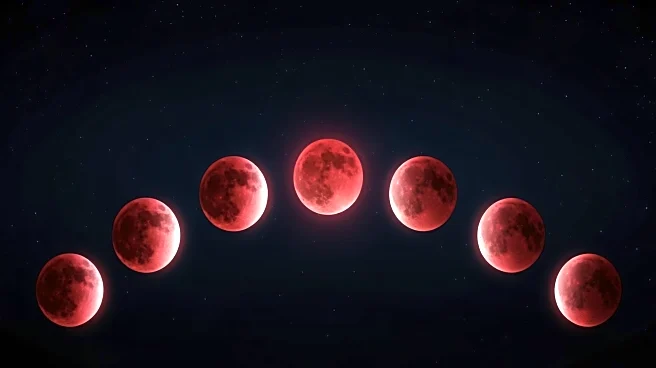
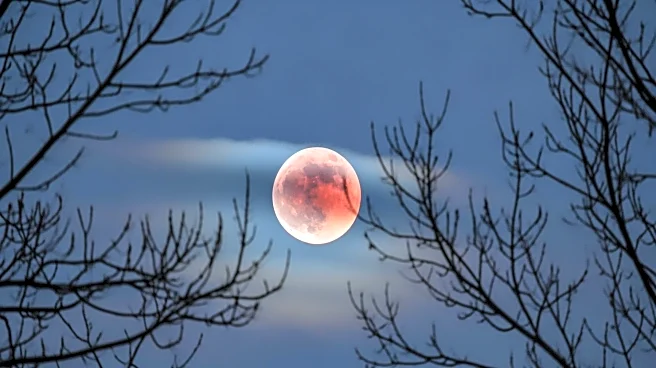
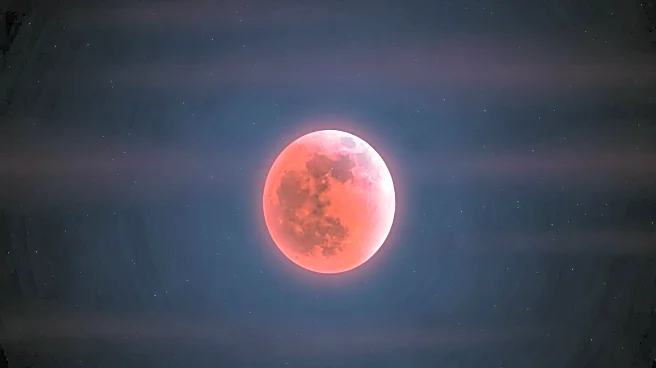
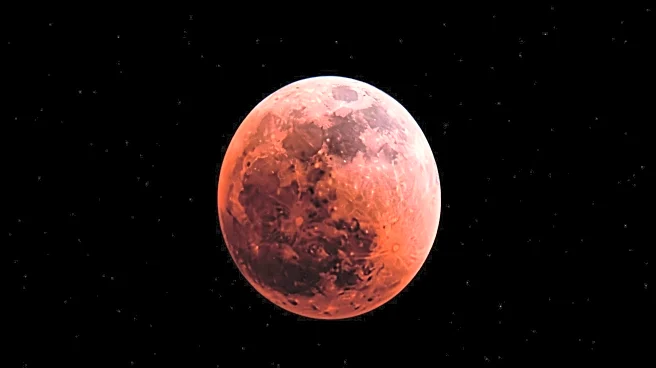
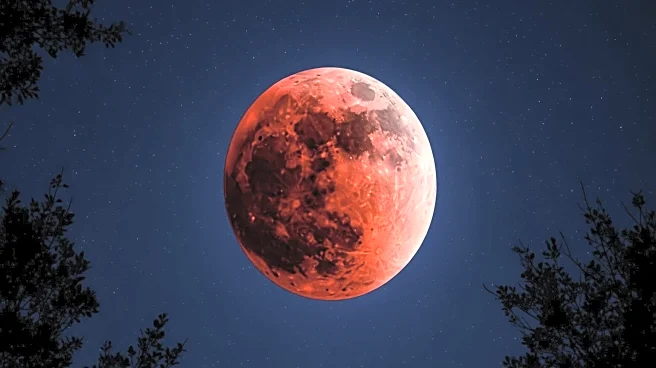
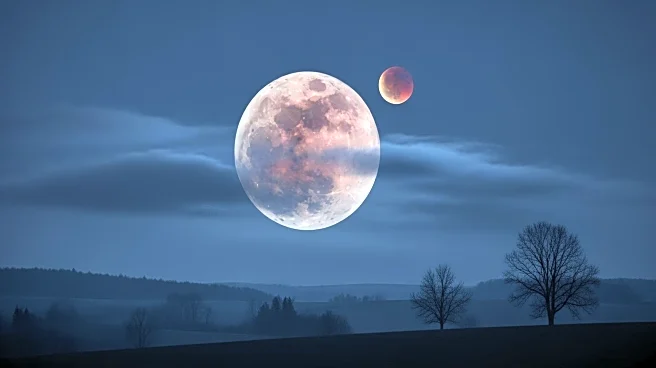
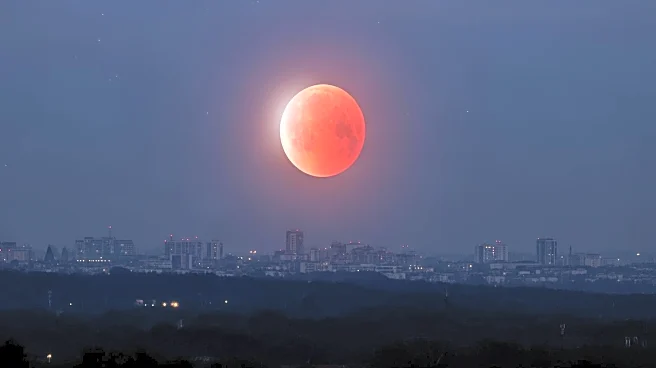
A total lunar eclipse, commonly referred to as a 'Blood Moon,' will be visible across North America on March 3, 2026. During this astronomical event, the Earth will position itself directly between the Sun and the Moon, causing the Moon to pass into Earth's
shadow. This alignment results in the Moon taking on a reddish hue due to the filtering of sunlight through Earth's atmosphere. The eclipse will be visible in its entirety across various Californian cities, including Santa Barbara, Los Angeles, and San Francisco. The event will begin with the penumbral phase at 12:44 a.m. PST and conclude at 6:23 a.m. PST. The totality phase, when the Moon appears fully red, will last approximately 58 minutes, peaking at 3:33 a.m. PST. This will be the first total lunar eclipse visible in the Americas since March 2025.
Why It's Important?
The occurrence of a total lunar eclipse is a significant event for both astronomers and the general public, offering a rare opportunity to witness a celestial phenomenon without the need for special equipment. The 'Blood Moon' provides a unique educational moment to understand the dynamics of celestial bodies and their interactions. For the scientific community, such events are crucial for studying the Earth's atmosphere and its effects on light. The widespread visibility of this eclipse across North America allows millions to engage with astronomy, potentially inspiring interest in the sciences. Additionally, the event is a reminder of the natural cycles and phenomena that occur beyond our immediate environment, fostering a sense of global connectivity and curiosity.
What's Next?
Following this event, the next total lunar eclipse visible in North America will occur on June 26, 2029. For those unable to view the eclipse outdoors, Griffith Observatory will provide a livestream of the event, ensuring accessibility to a broader audience. This initiative highlights the growing trend of using digital platforms to enhance public engagement with scientific events. As weather conditions can affect visibility, the livestream offers a reliable alternative for enthusiasts and educators alike. The anticipation of future eclipses continues to build interest and awareness around astronomical events, encouraging ongoing public and academic engagement.