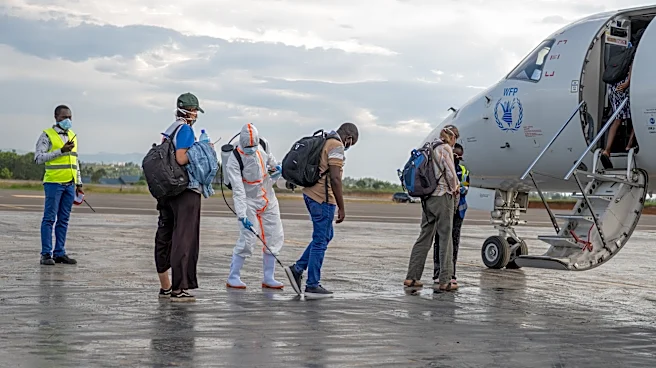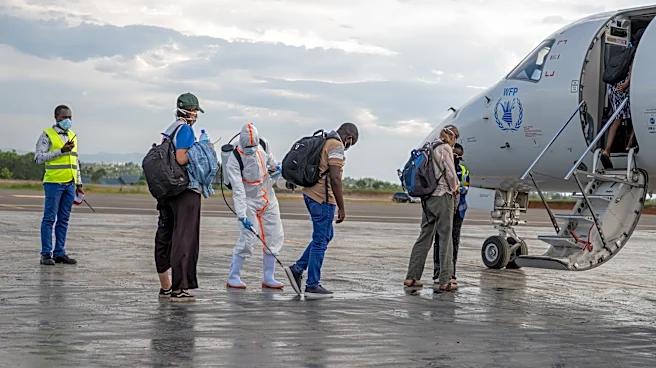

What's Happening?
Dr. Peter Stafford, a U.S. doctor who contracted Ebola while on a humanitarian mission in the Democratic Republic of Congo, has been released from a German hospital after recovering from the virus. Stafford was
working with the missionary group Serge when he was infected. He was evacuated to Berlin's Charité hospital on May 20, where he received antiviral therapy and supportive medical care. His wife, Rebekah, also a doctor, and their four children were evacuated and quarantined but did not develop symptoms. The Bundibugyo ebolavirus outbreak in Congo, which has spread to Uganda, is causing concern among health officials due to its potential size and lack of available vaccines or treatments.
Why It's Important?
The recovery of Dr. Stafford highlights the effectiveness of advanced medical interventions in treating Ebola, a virus with a high mortality rate. This case underscores the importance of international cooperation in managing infectious disease outbreaks, as Stafford's treatment in Germany exemplifies global health collaboration. The ongoing outbreak in Congo and its spread to Uganda pose significant public health challenges, emphasizing the need for robust surveillance and response strategies. The lack of vaccines for the Bundibugyo strain further complicates containment efforts, potentially impacting regional stability and international health security.
What's Next?
Health officials are likely to intensify efforts to monitor and contain the Ebola outbreak in Congo and Uganda. International health organizations may increase support for affected regions, focusing on surveillance, treatment, and prevention measures. The situation may prompt discussions on developing vaccines and treatments for less common Ebola strains like Bundibugyo. Continued vigilance and resource allocation will be crucial to prevent further spread and mitigate the outbreak's impact on public health and safety.