





What's Happening?
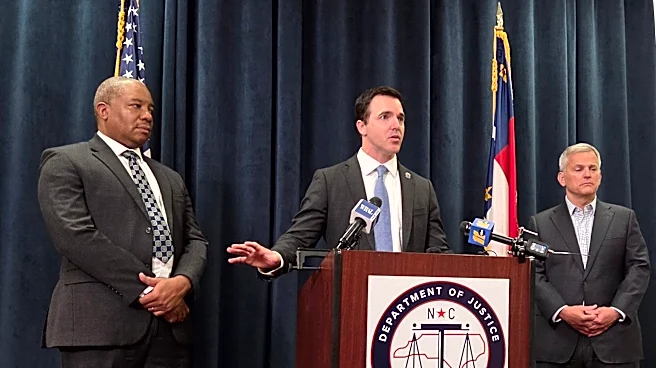
North Carolina law enforcement officers are no longer required to collect age and race data during traffic stops, effective July 1. This change was enacted as part of the state's budget bill, a provision that reportedly went unnoticed by many legislators
due to its brevity within the 634-page document. Since January 1, 2000, state law had mandated this data collection, which researchers and advocates considered a vital tool for identifying potential patterns of bias in policing. Law enforcement organizations, however, had advocated for the termination of this practice, citing it as burdensome and yielding inconsistent or unreliable results. While the statewide mandate has ended, some law enforcement agencies may choose to continue gathering demographic data voluntarily.
Why It's Important?
The termination of mandatory traffic stop data collection in North Carolina carries significant implications for civil rights, police accountability, and public trust. For over two decades, this data served as a crucial mechanism for transparency, allowing for the analysis of potential racial profiling and other biases in law enforcement practices. Its removal could hinder efforts to identify and address systemic inequalities, making it more challenging for civil rights organizations and researchers to advocate for reforms. Conversely, law enforcement agencies that found the collection burdensome may experience administrative relief, but at the potential cost of increased scrutiny and diminished public confidence regarding fairness in policing. The decision also highlights concerns about legislative transparency, as a significant policy change was embedded within a large budget bill, potentially bypassing thorough debate and public awareness.
What's Next?
In the wake of this legislative change, several developments are anticipated. Civil rights organizations and advocacy groups are likely to intensify their calls for voluntary data collection by individual law enforcement agencies and may push for new legislation to reinstate the mandate or implement alternative oversight mechanisms. There could be increased pressure on local police departments to demonstrate their commitment to equitable policing through other means, such as internal audits or community engagement initiatives. The absence of statewide data may lead to a fragmented understanding of traffic stop demographics across North Carolina, making it harder to assess overall trends or compare practices between jurisdictions. Furthermore, the process by which this change was enacted—as a small provision in a large budget bill—may prompt discussions about legislative procedures and the need for greater transparency in policy-making.
Beyond the Headlines
The termination of traffic stop data collection in North Carolina delves into deeper societal and ethical questions surrounding surveillance, privacy, and the role of data in governance. While proponents of data collection emphasize its utility in ensuring accountability and identifying bias, opponents often raise concerns about the administrative burden and the potential for data misuse or misinterpretation. This event reflects an ongoing national debate about the balance between law enforcement efficiency and civil liberties, particularly in the context of racial justice. It also highlights the power dynamics within legislative processes, where significant policy shifts can occur with minimal public discourse. The long-term impact could be a widening gap in understanding the realities of policing for different communities, potentially exacerbating existing tensions and trust deficits between law enforcement and the public, especially minority groups.