




What's Happening?
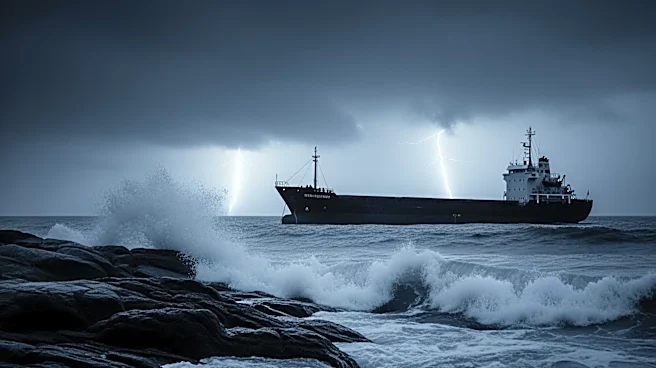
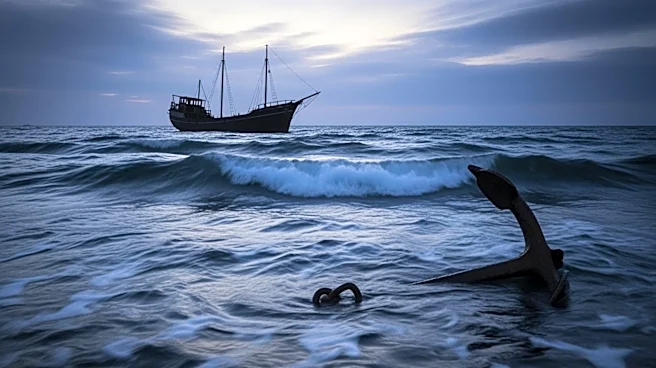
Turkish authorities successfully conducted a rescue operation for eight crewmembers from the cargo ship Ninova, which ran aground on the northern coast of Turkey near Sakarya during a severe storm. The incident occurred on the morning of May 1, when the ship began
dragging its anchor and was subsequently driven ashore by the storm. The Directorate General of Coastal Safety (KEGM), along with the Coast Guard, local police, and fire departments, responded to the emergency. Due to heavy surf and strong winds, traditional rescue methods such as approaching the ship by water or using a helicopter were deemed impossible. Instead, a breeches buoy system was employed, allowing the crew to be safely winched to shore. The ship, built in 1989 and currently registered in Cameroon, has a history of safety issues and was previously banned by Italy under the Paris MOU in 2024.
Why It's Important?
This incident highlights ongoing concerns about maritime safety and the challenges faced by aging vessels with unclear ownership and management. The Ninova's history of safety deficiencies underscores the importance of stringent maritime regulations and enforcement to prevent such incidents. The successful rescue operation by Turkish authorities demonstrates the effectiveness of traditional rescue techniques in adverse conditions, ensuring the safety of the crew. This event also raises questions about the oversight and maintenance of older ships, which can pose significant risks to maritime safety and the environment. The grounding of the Ninova serves as a reminder of the potential dangers posed by severe weather conditions in the Black Sea region, emphasizing the need for preparedness and robust response strategies.
What's Next?
Following the rescue, the crew members are undergoing medical checks to ensure their well-being. The future of the Ninova remains uncertain, as it is currently sitting with a list on the shoreline and reports suggest it has taken on water. Authorities may need to assess the environmental impact of the grounding and consider salvage operations to prevent further damage. The incident may prompt a review of maritime safety protocols and regulations, particularly concerning older vessels with a history of deficiencies. Stakeholders in the maritime industry, including regulatory bodies and shipping companies, may need to collaborate to enhance safety standards and prevent similar occurrences in the future.