




What's Happening?
The City of Fort Collins has decided to withdraw its permit application for the Halligan Water Supply Project. Instead, the city will integrate into the Northern Integrated Supply Project (NISP) for its water storage needs through a one-year interim agreement.
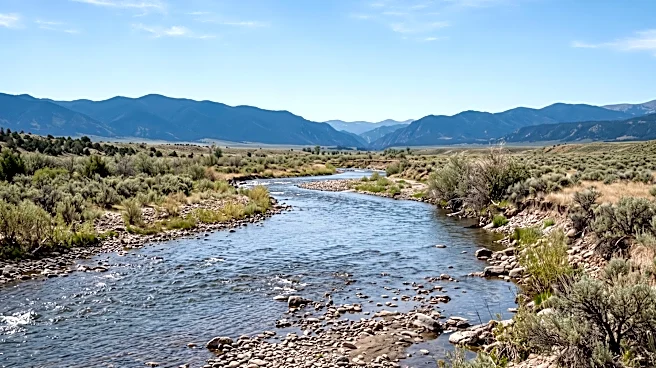
The Halligan Reservoir Project, which aimed to expand the existing reservoir 25 miles northwest of Fort Collins, was intended to increase water storage by approximately 8,200 acre-feet. However, the United States Army Corps of Engineers was unlikely to approve the renovation due to ecological concerns and escalating construction and permit costs. Consequently, Fort Collins was advised to pursue an agreement with NISP. On November 12, the Board of Directors at Northern Colorado Water Conservancy District confirmed the inclusion of Fort Collins and Johnstown into NISP. This means Fort Collins' water supply will now originate from the Poudre River and be stored in the planned Glade Reservoir, part of the NISP system. Water will be drawn from the Poudre River only when water rights are in priority, typically 15-30 days per year on average.
Why It's Important?
This shift is significant for Fort Collins' long-term water security and regional water management. The discontinuation of the Halligan Project highlights the increasing challenges and costs associated with large-scale water infrastructure development, particularly concerning environmental impacts and regulatory hurdles. Integrating into NISP provides Fort Collins with an alternative water storage solution, but it also introduces new complexities. The NISP project itself has faced cost escalations, now estimated at $2.7 billion, and may require rerouting U.S. Highway 287. Concerns have also been raised by river ecologists regarding the potential ecological impact of NISP on the Poudre River. Ecologists worry that taking water during high flows to fill the Glade Reservoir could disrupt the river's natural ecosystem, which relies on these flows for rejuvenation. This decision underscores the ongoing tension between urban water demands and environmental preservation in the rapidly growing Western U.S.
What's Next?
Fort Collins will proceed with the one-year interim agreement to integrate into the Northern Integrated Supply Project. Northern Water will continue to monitor water levels in the Poudre River, utilizing 75 years of collected data to manage water availability. The long-term ecological effects of NISP on the Poudre River will be a critical area of focus, with environmental groups and scientists likely continuing to scrutinize the project's impact. The financial implications of NISP, including its rising costs and potential need for highway rerouting, will also remain a key consideration for participating entities. Future discussions will likely involve how to mitigate environmental impacts and manage the substantial financial investment required for the project, especially given concerns about climate variability affecting future runoff patterns and reservoir filling capabilities.
Beyond the Headlines
The decision by Fort Collins reflects a broader trend in water resource management across the American West, where cities are grappling with aging infrastructure, increasing populations, and the unpredictable effects of climate change. The shift from an independent reservoir expansion to participation in a larger regional project like NISP illustrates a move towards more collaborative, albeit complex, water solutions. This also brings to the forefront the ethical considerations of balancing human water needs with ecological health. The debate over NISP's impact on the Poudre River highlights the ongoing challenge of valuing natural river systems against the perceived necessity of water storage. The project's vulnerability to dry years, as noted by ecologists, also raises questions about the long-term reliability of such large-scale water projects in an era of climate uncertainty, pushing for more adaptive and resilient water management strategies.