








What's Happening?
The United States and Iran are currently at an impasse over several critical issues, including Iran's nuclear program and its control over the Strait of Hormuz. Iranian officials, including Foreign Affairs Ministry Spokesperson Esmail Baghaei, have indicated
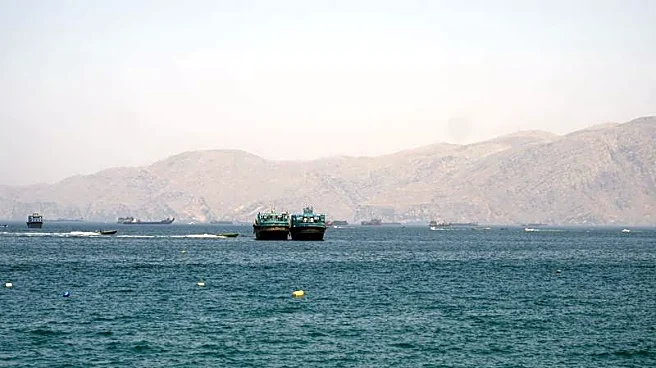
that Iran is reviewing a recent U.S. proposal but has not yet made a decision. The U.S., under President Trump, has warned of potential renewed attacks if Iran does not accept a deal soon. The Institute for Science and International Security has reported that U.S. and Israeli airstrikes have targeted Iranian nuclear sites, complicating Iran's ability to develop nuclear weapons. Iran continues to assert its sovereignty over the Strait of Hormuz, a strategic chokepoint for global oil supply, as a means of deterrence against the U.S. and Israel.
Why It's Important?
The ongoing standoff between the U.S. and Iran has significant implications for global security and economic stability. Control over the Strait of Hormuz is crucial as it is a major route for oil transportation, and any disruption could lead to increased global oil prices. The U.S. naval blockade and Iran's military posturing in the region heighten tensions and the risk of conflict, which could involve other regional and global powers. The situation also affects U.S. foreign policy and its relations with allies, as well as domestic political dynamics, given the potential impact on energy prices and economic conditions.
What's Next?
Iran is expected to respond to the U.S. proposal, which could either lead to renewed negotiations or further escalation. The U.S. has indicated readiness to continue military and economic pressure if Iran does not comply. The international community, including U.S. allies, may play a role in mediating the conflict or supporting sanctions. The situation remains fluid, with potential for both diplomatic resolution and military confrontation.