




What's Happening?
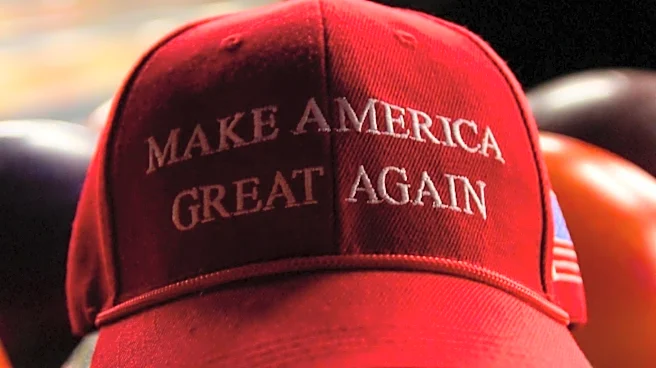
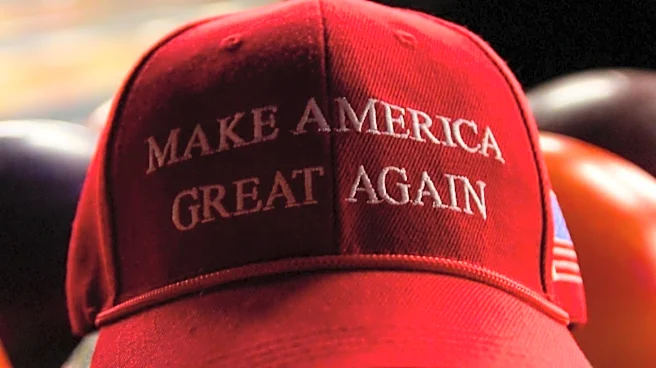
Representative Ayanna Pressley (D-MA) recently equated President Trump's 'Make America Great Again' (MAGA) movement to the Confederacy. Speaking at Roxbury Community College in Boston during a campaign event for Senator Ed Markey (D-MA), Pressley asserted
that the Confederacy remains active and that MAGA embodies white supremacy and anti-Blackness. She emphasized that the issue extends beyond President Trump himself, stating, 'It is bigger than Trump. Because whenever we do the work of ousting the occupant of the Oval Office, the Confederacy is still alive and well. That’s all MAGA is.' Pressley further elaborated, 'White supremacy is still alive and well. Anti-blackness will still be alive and well.' This statement was made in the context of her campaigning for Senator Markey, whom she endorsed in March, citing their collaborative efforts on immigration, criminal justice, and other progressive priorities.
Why It's Important?
Representative Pressley's comparison of the MAGA movement to the Confederacy carries significant political and social weight, particularly in the current polarized U.S. political landscape. Such a strong statement from a prominent Democratic lawmaker can intensify partisan divisions and fuel debates about the historical and contemporary manifestations of racial inequality and political extremism. For supporters of President Trump, this comparison is likely to be viewed as a provocative and unfair attack, potentially galvanizing their base. Conversely, for those who share Pressley's concerns about racial justice and the rise of white nationalism, her remarks may resonate as a powerful articulation of their anxieties. This rhetoric can influence public discourse, shape campaign narratives, and potentially impact voter sentiment in upcoming elections, especially in Massachusetts where Pressley is actively campaigning. The statement also highlights the ongoing struggle to define and confront issues of race and identity within American political movements.
What's Next?
Following Representative Pressley's remarks, it is likely that there will be continued discussion and debate across various media platforms and political circles. Opponents of Pressley and the Democratic Party may use her statements to criticize what they perceive as divisive rhetoric, potentially leading to counter-accusations and further polarization. Supporters, on the other hand, may amplify her message, using it to rally support for progressive causes and candidates. The comparison could also prompt other political figures to either endorse or condemn her stance, further shaping the national conversation. In the short term, these comments may become a talking point in the ongoing primary race for Senator Markey, potentially influencing voter perception of both Markey and his challenger. The broader implications could include increased scrutiny of political movements and their historical parallels, as well as continued efforts to address issues of racial justice and systemic inequality in the U.S.
Beyond the Headlines
The deeper implications of Representative Pressley's statement extend to the ongoing national reckoning with America's history of racial injustice and the legacy of the Confederacy. By drawing a direct line between the Confederacy and the MAGA movement, Pressley is not merely making a political jab but is engaging in a profound reinterpretation of contemporary political phenomena through a historical lens. This challenges the notion that the issues of white supremacy and anti-Blackness are relics of the past, suggesting instead that they are deeply embedded in current political ideologies and movements. Such a comparison forces a critical examination of how historical grievances and power structures continue to manifest in modern society. It also raises questions about the responsibility of political leaders to address these historical echoes and the potential for such rhetoric to either heal or further fracture a nation grappling with its identity. The statement underscores the persistent struggle to achieve a truly inclusive and equitable society, highlighting the enduring impact of historical injustices on present-day politics and social dynamics.