








What's Happening?
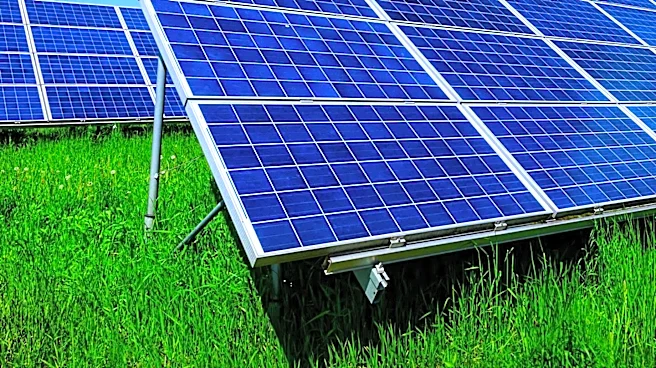
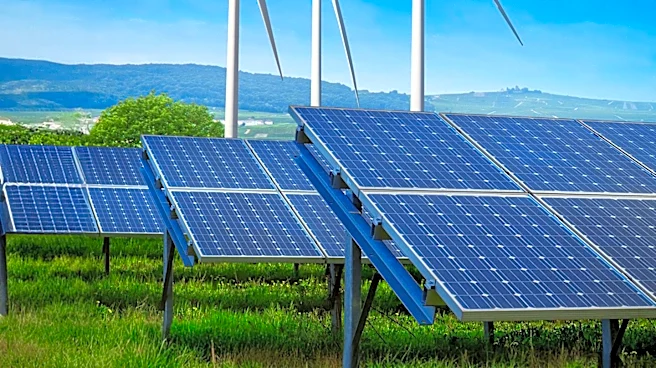
India's Union Minister of New and Renewable Energy, Pralhad Joshi, announced that the country's installed solar capacity has reached 162.15 gigawatts (GW) as of June 30, 2026. This marks a 57-fold increase from the 2.82 GW recorded in 2013-14. The growth
is part of India's broader renewable energy strategy, positioning the country as the third-largest in the world by installed solar capacity, following China and the United States. The expansion includes utility-scale, rooftop, and off-grid solar installations, supported by government initiatives like the Production Linked Incentive scheme and the PM Surya Ghar Muft Bijli Yojana.
Why It's Important?
India's rapid expansion in solar capacity underscores its commitment to transitioning towards renewable energy sources, which is crucial for meeting climate goals and reducing reliance on fossil fuels. This growth not only enhances energy security but also supports economic development through job creation in the renewable energy sector. The reduction in solar module imports, due to increased domestic manufacturing, further strengthens India's position in the global renewable energy market. The success of these initiatives could serve as a model for other countries aiming to boost their renewable energy capabilities.
What's Next?
India aims to achieve 500 GW of non-fossil-fuel power capacity by 2030. Continued investment in solar infrastructure and supportive policies will be essential to maintaining the current growth trajectory. The government will likely focus on further expanding domestic manufacturing capabilities and enhancing grid infrastructure to accommodate the increasing solar capacity. Monitoring the impact of these developments on energy prices and environmental sustainability will be crucial for ensuring long-term benefits.