
What's Happening?
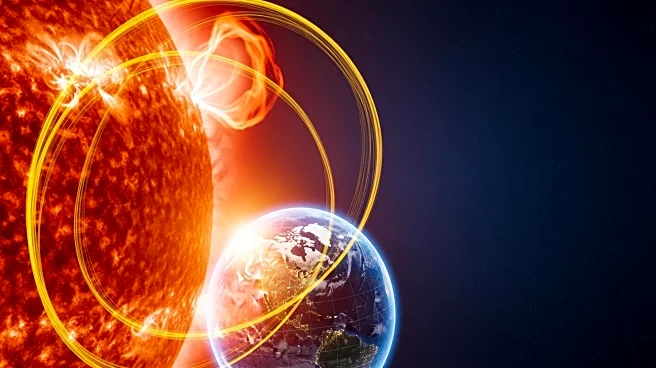
A powerful solar flare erupted from the sun on November 11, 2025, causing radiation levels in Earth's atmosphere to rise to the highest in nearly two decades. The flare, classified as an X5.1, originated
from the AR4274 sunspot and was accompanied by a stream of high-speed protons. This event led to a significant increase in radiation at altitudes where commercial aircraft operate, posing potential risks to passengers and crew. Researchers released stratospheric balloons to measure the radiation levels, which were found to be ten times higher than normal at 40,000 feet. The event, known as a Ground Level Event (GLE), is rare, with only 77 recorded since the 1940s.
Why It's Important?
The spike in radiation levels poses a significant risk to aviation safety, as it can affect aircraft electronics and increase cancer risks for passengers and crew. The incident highlights the need for better monitoring and preparedness for such solar events. The potential for widespread electronic malfunctions in aircraft could lead to dangerous situations, emphasizing the importance of equipping planes with radiation monitors. The unpredictability of GLEs and their potential impact on aviation and human health underscore the need for further research and preventive measures.
What's Next?
Researchers are advocating for the installation of radiation monitors on all aircraft to help pilots manage such events. The aviation industry may need to develop protocols for handling increased radiation levels, including potential changes in flight paths or altitudes. Further studies are required to understand the physics behind solar flares and their impact on Earth's atmosphere, which could lead to improved prediction and mitigation strategies.