




What's Happening?
Representative Riley Moore, R-W.Va., stated on August 20 that the Lindsey O. Graham Sanctioning Russia and Iran Act, which includes significant sanctions and tariffs against Russia, is likely to pass in the House. The Senate previously approved this bill
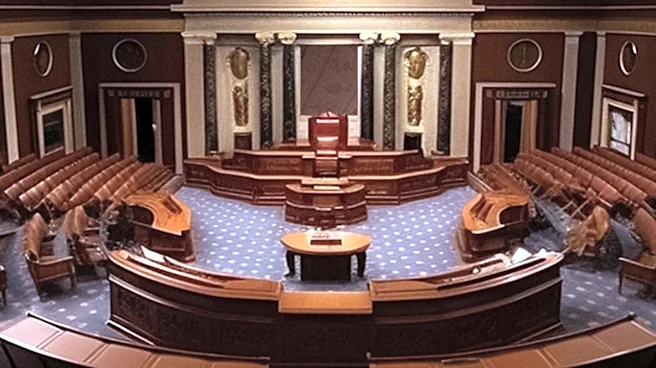
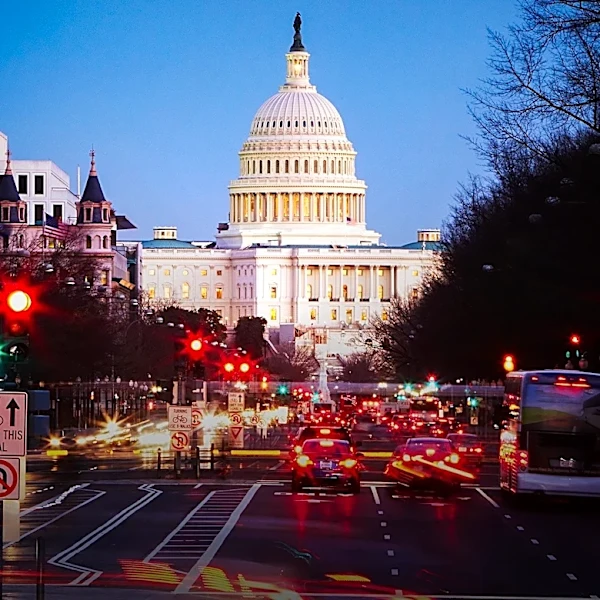
on August 7 with an 86-11 vote. A bipartisan group of 18 House members, co-led by Reps. Michael McCaul, R-Texas, and Steny Hoyer, D-Md., introduced identical legislation in the House on August 10. The White House has endorsed the bill, though House leaders have not yet publicly announced a vote schedule. The House is currently in recess until August 31. Rep. Moore expressed concern over India's continued role as a major importer of Russian oil despite strengthening relations between Washington and New Delhi, highlighting the bill's provision to impose tariffs on top buyers of Russian oil and gas.
Why It's Important?
This legislation holds significant implications for U.S. foreign policy and economic relations, particularly concerning Russia and its trading partners. The imposition of sanctions on Russian individuals and entities across its defense, energy, and financial sectors aims to exert economic pressure on Russia. Furthermore, the authorization for the President to levy tariffs on the top five importers of Russian energy could reshape global energy markets and trade dynamics. Countries like India, which continue to import Russian oil, would face economic consequences, potentially forcing them to re-evaluate their trade relationships. This bill underscores a bipartisan commitment in Congress to address Russia's actions through economic measures, signaling a unified front despite differing political affiliations. The potential passage of this bill could also influence the U.S.'s strategic alliances and its efforts to counter Russian influence on the international stage.
What's Next?
The House is expected to consider the Lindsey O. Graham Sanctioning Russia and Iran Act upon its return from recess on August 31. Given the bipartisan support in the Senate and the introduction of identical legislation by a bipartisan group in the House, the bill has a strong likelihood of passing. Once passed by the House, it would proceed to the President for signature, as the White House has already endorsed the legislation. Following its enactment, the U.S. government would begin implementing the mandated sanctions and tariffs. This would likely lead to immediate reactions from Russia, as well as from countries identified as top importers of Russian energy, such as India. These nations may explore alternative energy sources or diplomatic avenues to mitigate the impact of the tariffs. The legislation's implementation will be closely watched for its effectiveness in achieving its stated goals and its broader geopolitical ramifications.
Beyond the Headlines
The potential passage of this bill extends beyond immediate economic sanctions, touching upon deeper geopolitical and ethical considerations. The legislation's focus on penalizing countries that continue to import Russian energy raises questions about energy security and sovereignty for nations reliant on Russian resources. It could accelerate a global shift away from Russian energy, prompting a re-evaluation of energy supply chains and investments in alternative energy sources worldwide. Ethically, the bill forces countries to choose between economic self-interest and aligning with U.S. foreign policy objectives, potentially creating new diplomatic tensions or strengthening existing alliances. The long-term impact could include a more fragmented global economy, where trade relationships are increasingly dictated by geopolitical alignments rather than purely economic factors. This could also set a precedent for how the U.S. addresses future international conflicts through economic leverage.