

What's Happening?
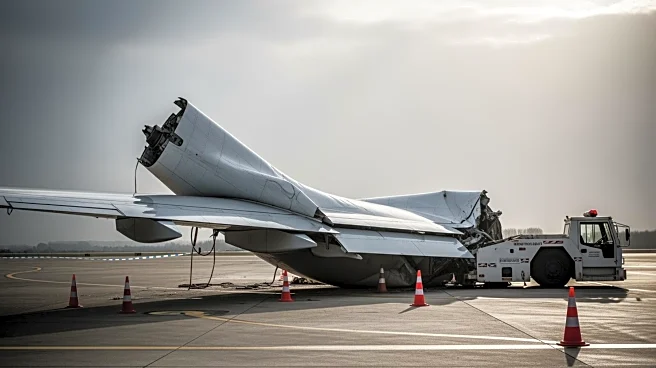
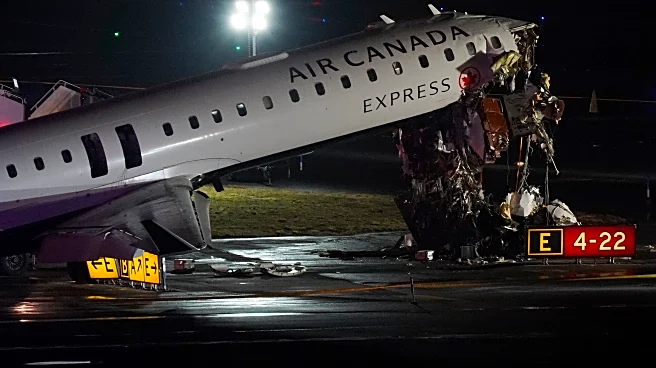
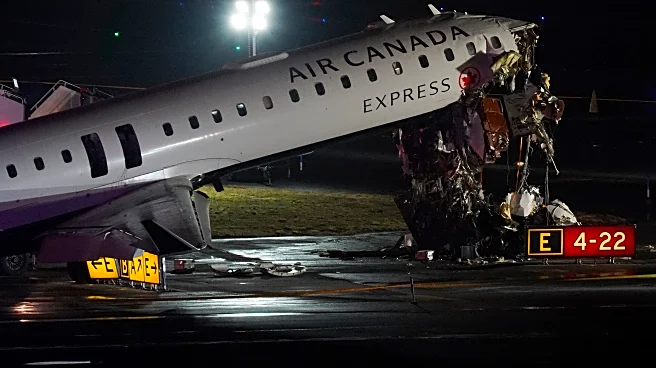
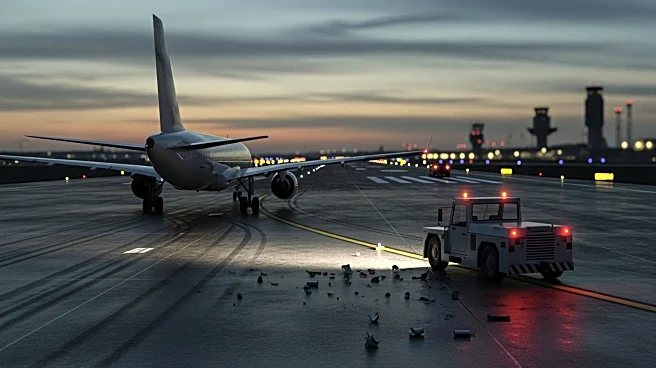
An Air Canada Express regional jet, operated by Jazz Aviation, collided with a ground vehicle upon landing at New York's LaGuardia Airport. The incident occurred on Sunday evening as the CRJ-900 plane, arriving from Montreal, struck a Port Authority fire
truck at approximately 24 miles per hour. This collision led to the closure of the airport, as the U.S. Federal Aviation Administration (FAA) issued a ground stop for all planes. The FAA's notice indicated that the halt was due to an emergency, with a high probability of extension. As a result, arriving flights were either diverted to other airports or returned to their origin. The New York Fire Department confirmed its response to the incident but did not provide further details. Air Canada and the FAA have yet to comment on the situation.
Why It's Important?
The collision at LaGuardia Airport underscores the potential vulnerabilities in airport operations and the critical need for stringent safety protocols. The incident not only disrupted travel plans for numerous passengers but also highlighted the operational challenges faced by airports in managing unexpected emergencies. The ground stop order affected flights nationwide, illustrating the interconnected nature of air travel and its susceptibility to localized incidents. This event may prompt a review of safety measures and emergency response protocols at major airports, potentially leading to policy changes aimed at preventing similar occurrences in the future.
What's Next?
The immediate focus will likely be on investigating the cause of the collision and assessing the damage to both the aircraft and the ground vehicle. The FAA and other relevant authorities may conduct a thorough review to determine any lapses in safety procedures. Depending on the findings, there could be recommendations for enhanced safety measures or changes in operational protocols at LaGuardia and other airports. Additionally, stakeholders such as airlines, airport authorities, and regulatory bodies may engage in discussions to improve coordination and response strategies for future incidents.