



What's Happening?
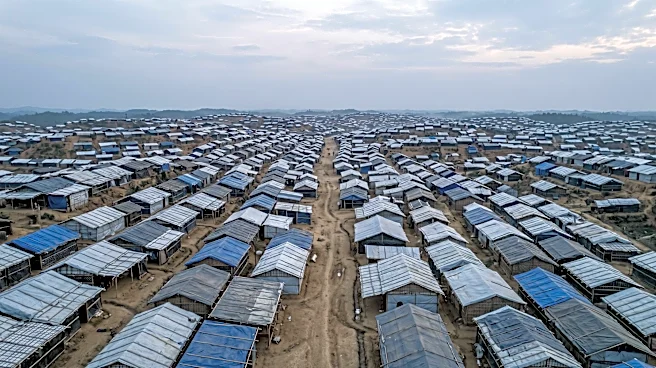
Bangladesh is facing an escalating burden in hosting the 1.2 million Rohingya refugees from Myanmar, as international funding for humanitarian assistance continues to decline. The situation, now nine years into the influx, is deemed unsustainable by officials,
with conditions in the Cox's Bazar camps deteriorating. The Rohingya population has grown significantly, with approximately 260,000 children born in the camps since the 2017 military crackdown in Rakhine State, and an additional 154,690 Rohingyas arriving since 2023 due to intensified fighting. Despite the growing population, funding for the humanitarian response has sharply decreased. In 2025, only 46% of the required $934.5 million was received, and for 2026, the UN and its partners are seeking a reduced amount of $710.5 million, primarily due to a global shortage of humanitarian financing.
Why It's Important?
The shrinking international funding has severe consequences for the Rohingya refugees and Bangladesh. Essential services such as food, health, education, and water and sanitation are being cut. The World Food Programme (WFP) has had to reduce monthly food rations, leading to high rates of malnutrition, with 90% of camp residents unable to afford an adequate diet and 15% of children suffering from acute malnutrition in 2023. The reduction in educational facilities and lack of supplies are creating a 'lost generation' of Rohingya youth, increasing desperation, early marriages, and unsafe migration attempts. For Bangladesh, the crisis imposes a heavy financial, diplomatic, and security burden, with the government spending an estimated $1.5 billion over six years through 2023, much of it on security and environmental costs. This situation underscores the urgent need for increased international burden-sharing and renewed political engagement to create conditions for the safe and voluntary return of the Rohingya to Myanmar.
What's Next?
The immediate future for Rohingya refugees in Bangladesh appears bleak without a significant increase in international aid. The current funding shortfall will likely lead to further deterioration of living conditions, increased health risks, and a continued decline in educational and livelihood opportunities within the camps. The UN and its partners will continue to advocate for more funding, but the global humanitarian financing landscape remains challenging. Bangladesh will likely continue to press the international community for greater support and a more robust diplomatic effort to address the root causes of the crisis in Myanmar, which remain the primary obstacle to repatriation. The growing desperation among the youth could also lead to increased instability within the camps and surrounding areas, as well as more dangerous attempts at irregular migration.
Beyond the Headlines
The protracted Rohingya crisis in Bangladesh highlights a broader global challenge of managing large-scale refugee populations in the face of diminishing international attention and resources. The 'hyper-prioritized plan' requested by donors reflects a global trend of resource scarcity in humanitarian aid, forcing difficult choices about which needs to address. This situation also exposes the long-term environmental impact of hosting such a large population, with significant forest and biodiversity losses in the Cox's Bazar area. The lack of adequate education and livelihood opportunities for Rohingya youth creates a demographic vulnerable to exploitation and radicalization, posing long-term security concerns for the region. The crisis also tests the limits of international solidarity and the principle of burden-sharing, as host countries like Bangladesh bear a disproportionate share of the responsibility.