






What's Happening?
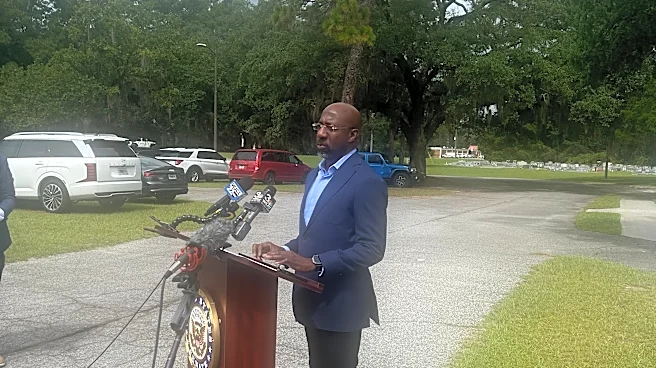
U.S. Senator Reverend Raphael Warnock (D-GA) has called for a statewide moratorium on data center construction in Georgia. This announcement follows his visit to the proposed site of OpenAI’s new 3.2-gigawatt data center in Effingham County, where he met
with residents and members of the Protect Effingham Alliance. These groups expressed significant concerns regarding the project's potential impact, including higher utility costs and increased water, light, and noise pollution. Senator Warnock highlighted a perceived lack of transparency in the planning and development of such large-scale data centers across the state and country. He stated that a moratorium could only be lifted for specific projects if certain safeguards are implemented, such as assurances against utility bill increases, the elimination of 'sweetheart tax giveaways' to developers, the absence of non-disclosure agreements (NDAs), and guarantees against air, water, noise, and light pollution. OpenAI's 'Project Camellia,' a 1,400-acre data center, is projected to require 3.2 gigawatts of power, equivalent to powering 2.3 million homes.
Why It's Important?
Senator Warnock's call for a moratorium underscores a growing tension between economic development and community welfare in the context of the rapidly expanding data center industry. While local officials, such as Effingham County Manager Tim Callanan, suggest that the OpenAI data center could significantly reduce property taxes for residents, potentially offering $1,300 in relief for a $350,000 taxable home, community groups and Senator Warnock argue that these benefits may not outweigh the environmental and social costs. The debate highlights concerns about the long-term sustainability of such projects, particularly regarding their immense power and water consumption, and the potential for increased utility rates for existing residents. The lack of transparency and community involvement in decision-making processes for these large-scale developments is a critical point of contention, raising questions about equitable development and the protection of local interests against powerful corporate entities. This issue is not isolated to Effingham County, with other Georgia candidates and officials also weighing in on the balance between technological advancement and local impact.
What's Next?
The immediate next step involves a vote by the Effingham County Commission on a 'bridge' payment that could lead to a six-mil reduction in property taxes, as proposed by County Manager Tim Callanan. This vote will indicate the local government's stance on the financial incentives tied to the OpenAI project. Senator Warnock's call for a statewide moratorium will likely prompt further legislative discussions and potentially influence future policy decisions regarding data center development in Georgia. Other political figures, including Republican U.S. Rep. Mike Collins and Democratic U.S. Sen. Jon Ossoff, have also expressed views on data centers, with Collins emphasizing local decision-making and Ossoff requesting a federal investigation into their impact on electricity bills. The Georgia Department of Community Affairs has noted 16 new data center projects announced since January 1, indicating that the issue of regulating these facilities will remain a prominent topic in state politics and community discussions. The outcome of these debates could set precedents for how states balance technological growth with environmental and community concerns.
Beyond the Headlines
The controversy surrounding data center development in Georgia, exemplified by OpenAI's 'Project Camellia' and Senator Warnock's moratorium call, reveals deeper implications for the future of infrastructure, energy policy, and community autonomy in the digital age. The immense power demands of these facilities, such as the 3.2 gigawatts required by OpenAI's project, raise critical questions about energy grid stability, the transition to renewable energy sources, and the potential for increased carbon footprints. While OpenAI plans to use a closed-loop system for water, the sheer scale of operations still prompts environmental scrutiny. Furthermore, the debate touches upon the ethical considerations of corporate influence in local governance, particularly concerning tax incentives and the perceived exclusion of residents from decision-making processes. The push for transparency and community safeguards reflects a broader societal demand for accountability from large technology companies, ensuring that their expansion benefits rather than burdens local populations. This situation could catalyze a re-evaluation of how states regulate and integrate high-tech industries, potentially leading to more stringent environmental and community impact assessments for future developments.