
What's Happening?
For the first time in the 25-year history of the International Space Station (ISS), NASA has decided to bring a crew back to Earth earlier than planned. The Crew-11 astronauts, consisting of Zena Cardman,
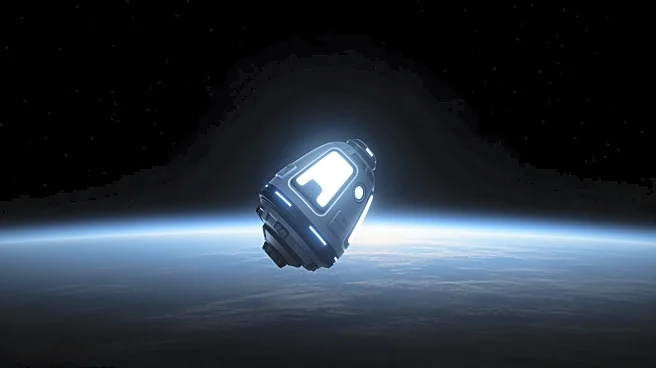
Mike Fincke, Kimiya Yui, and Oleg Platonov, are set to return aboard the SpaceX Dragon on January 14, 2026. This decision was prompted by a serious medical issue affecting one of the crew members. NASA spokesperson Jared Isaacman stated that while the ISS is equipped with basic medical supplies, it lacks the necessary equipment to treat certain conditions in microgravity. Due to NASA's safety protocols, all four astronauts must return together, as they cannot remain on the station without a confirmed seat on a docked spacecraft. The mission, originally scheduled to last until February 20, will now conclude with a splashdown off the California coast on January 15.
Why It's Important?
This unprecedented decision underscores the challenges and risks associated with long-duration space missions. The early return of Crew-11 highlights the limitations of medical care available on the ISS and the importance of having contingency plans for medical emergencies. The decision impacts the operational dynamics of the ISS, as it will temporarily reduce the crew size to three, affecting ongoing research and maintenance activities. This situation also emphasizes the need for robust medical support systems in space exploration, which is crucial as missions become longer and more complex, such as future missions to the Moon and Mars.
What's Next?
Following the departure of Crew-11, the ISS will be manned by a reduced crew of three until the arrival of Crew-12 in mid-February. NASA and its partners will need to ensure that the station's operations continue smoothly with fewer personnel. Additionally, the incident may prompt a review of medical protocols and equipment on the ISS to better prepare for future emergencies. The upcoming Crew-12 mission will need to be expedited to minimize the period of reduced crew capacity on the ISS.