










What's Happening?
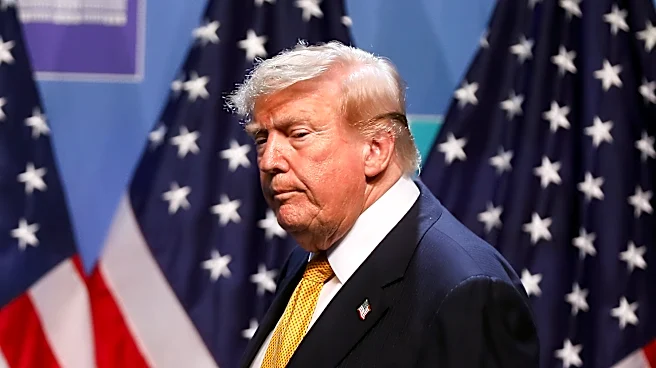
Despite President Trump's administration's general opposition to global climate agreements, the CORSIA climate deal remains intact. CORSIA, managed by the UN's aviation body ICAO, allows airlines to offset emissions growth by purchasing carbon credits,
thus enabling continued air traffic growth under the guise of 'carbon neutral growth'. The deal, criticized for its minimal environmental impact, primarily serves geopolitical interests by preventing more stringent measures, particularly from Europe. The EU, which initially attempted to impose a carbon price on all flights touching Europe, is reconsidering its stance and may extend its carbon market to include all departing flights, challenging CORSIA's effectiveness.
Why It's Important?
The persistence of CORSIA highlights the complex interplay between environmental policy and international politics. While the deal offers minimal climate benefits, it reflects the geopolitical dynamics between major powers like the US, EU, and China. The EU's potential move to extend its carbon market could significantly impact global aviation emissions policies, setting a precedent for more rigorous environmental standards. This development could pressure other regions to adopt similar measures, influencing the aviation industry's approach to sustainability and carbon emissions management.
What's Next?
The EU is poised to decide on July 17 whether to extend its carbon pricing to all flights departing from Europe. This decision could lead to increased taxes on long-haul flights, raising significant revenue and addressing perceived inequities in current aviation taxation. The outcome may provoke further lobbying from the aviation industry and political maneuvering from international stakeholders. If the EU proceeds, it could catalyze broader changes in global aviation emissions policies, potentially prompting other regions to reassess their approaches to climate action in the aviation sector.