

What's Happening?
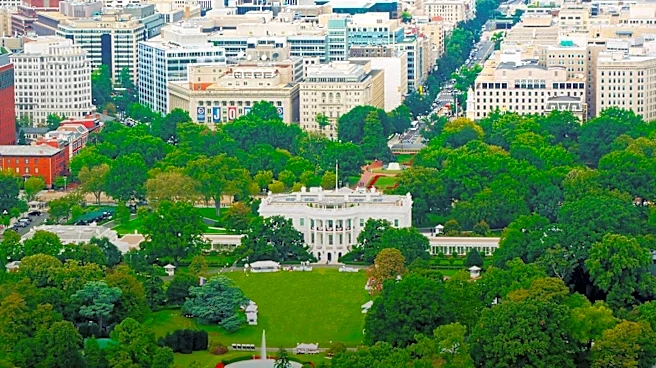
President Trump has publicly boasted about transforming the White House into a "palace," highlighting extensive renovations and the installation of a new helipad on the South Lawn. He shared a photo of the black and white granite helipad, calling it a "work
of art" and asserting that the White House has reached unprecedented levels of beauty and magnificence. According to President Trump, the White House was previously a "badly maintained 'dump'" under Democrats. He also mentioned signing his name on one of the granite slabs for the helipad, which is designed to resemble the presidential seal. Other renovations include covering the Oval Office in gold, paving the Rose Garden for a new patio, and redesigning the Palm Room with marble. Additionally, a pathway leading to the White House main entrance was redone with "Highest Grade, 4 and 5 inch thick, White Granite." President Trump also mentioned a large, gilded ballroom project, which he claims is "Massively expensive, but free of charge to the American Taxpayer," despite reports suggesting otherwise.
Why It's Important?
These renovations and President Trump's public statements about them carry significant implications for the perception of the presidency and the use of public resources. His comparison of the White House to a "palace" and his assertion of its previous state as a "dump" could be seen as a political statement, potentially alienating critics who view such actions as monarchical. The cost of these projects, particularly the helipad and the proposed ballroom, raises questions about fiscal responsibility and transparency, especially given the conflicting claims about taxpayer funding. The involvement of a Lockheed Martin subsidiary in funding the helipad, as stated by President Trump, also introduces a layer of corporate influence in government property, even if a spokesperson for Lockheed Martin stated their contribution was to the National Park Service and guided by ethics standards. This focus on lavish renovations could divert attention from other pressing national issues and fuel ongoing debates about the appropriate use of presidential power and resources.
What's Next?
The ongoing renovations and President Trump's public commentary are likely to continue to draw scrutiny and debate. Critics, including those involved in the 'No Kings' protests, are expected to continue to voice concerns about what they perceive as an authoritarian approach and excessive spending. The legal challenges surrounding the gilded ballroom project, which the Supreme Court has allowed to proceed for now, indicate that its future may still be contested. Further details regarding the funding and true costs of these projects, particularly the ballroom, may emerge, potentially leading to more public discussion and political fallout. The long-term impact of these changes on the historical integrity and public perception of the White House will also be a subject of ongoing observation and commentary.
Beyond the Headlines
The narrative surrounding the White House renovations extends beyond mere aesthetics, touching upon deeper themes of presidential legacy, public perception, and the symbolism of national institutions. President Trump's desire to put his "mark on Washington" through these projects, including the restoration of the Lincoln Memorial Reflecting Pool and a proposed Triumphal Arch, reflects a broader ambition to reshape the capital's landscape. However, this ambition is met with resistance, as evidenced by the 'No Kings' protests, which highlight a fundamental tension between presidential authority and democratic ideals. The controversy over the Reflecting Pool's damage, initially blamed on vandals but later attributed to a botched contractor job, underscores issues of accountability and the challenges of managing large-scale public works. Ultimately, these renovations and the discourse surrounding them contribute to a larger conversation about the nature of power, the role of the presidency, and the values that the White House, as "The People's House," should embody.