

What's Happening?
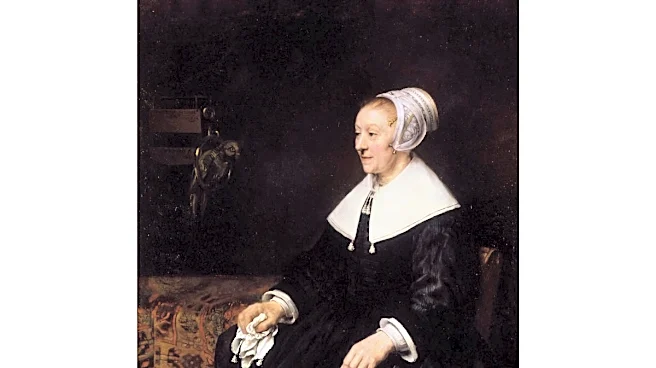
The British government has imposed a temporary export ban on Rembrandt's 'Portrait of Catrina Hooghsaet,' a painting valued at £71 million (approximately 83 million euros). This measure aims to provide British museums and institutions with an opportunity
to raise the necessary funds to acquire the artwork and keep it within the United Kingdom. The painting, created in 1657, has been displayed in the UK since the mid-18th century and is considered one of Rembrandt's most exceptional works from his final period. It depicts Catrina Hooghsaet, a wealthy woman from Amsterdam's Mennonite community, whose life deviated from societal norms as she lived apart from her husband. The government's decision follows a mechanism that allows for the temporary suspension of cultural object exports deemed national treasures, giving eligible purchasers time to secure funding. The final decision on the export license application is deferred until December 26, 2026, during which time expressions of interest from potential buyers will be accepted.
Why It's Important?
This action underscores the United Kingdom's commitment to preserving its cultural heritage and preventing significant artworks from leaving the country. The 'Portrait of Catrina Hooghsaet' is not only a masterpiece by Rembrandt but also holds substantial historical and cultural value for Britain, enriching the understanding of Rembrandt's work, social relations, gender, religion, and identity in the 17th-century United Provinces, and the history of portraiture. The painting's valuation at £71 million makes it the most expensive object ever designated a British national treasure, highlighting its immense economic and artistic significance. The temporary ban provides a critical window for British institutions to compete with international buyers, ensuring public access to a piece of art that has been part of the UK's cultural landscape for centuries. Failure to secure the painting could result in a significant loss to the nation's artistic patrimony.
What's Next?
The immediate next step involves a period until December 26, 2026, during which British authorities will actively seek expressions of interest from eligible buyers, including museums and institutions, to acquire the 'Portrait of Catrina Hooghsaet.' Following this initial suspension, the painting's current owners will have a 15-business-day cooling-off period to evaluate any purchase offers made at the recommended price of £71,696,324.90, plus VAT. If an option agreement is signed between the parties, a second suspension period of nine months will commence. During this time, the focus will be on fundraising efforts by potential British purchasers. The success of these efforts will determine whether the painting remains in the UK or is ultimately granted an export license.
Beyond the Headlines
The blocking of the Rembrandt export highlights the ongoing global challenge of retaining culturally significant artworks within their adopted national homes, especially in an increasingly globalized art market. This case raises questions about the balance between private ownership rights and public cultural heritage. The mechanism employed by the British government reflects a broader policy trend among nations to safeguard their artistic treasures, often through financial incentives or temporary export bans. It also emphasizes the role of philanthropy and public funding in securing such high-value acquisitions for national collections. The narrative of Catrina Hooghsaet, a woman defying societal norms, adds a layer of social historical significance to the artwork, making its preservation within a public collection even more compelling for scholarly research and public engagement on themes of gender and identity in historical contexts.