



What's Happening?
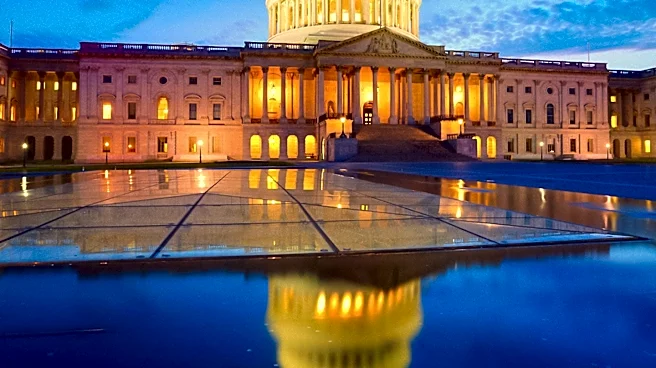
President Trump deployed thousands of National Guard troops to Washington D.C. as a central part of his administration's strategy to combat crime, particularly in cities led by Democrats. This deployment, which began last August, involves approximately
4,500 soldiers patrolling tourist-heavy areas, national monuments, and subway stations. The administration has informed Congress of its intention to maintain this deployment until the end of President Trump's term in 2029, projecting a total cost of $1.4 billion. Despite the significant presence, a Reuters review of publicly available charging documents in the Superior Court of the District of Columbia indicates that the National Guard's involvement in criminal cases is minimal, appearing in only about 1.3% of prosecutions. While the guardsmen are deputized as U.S. Marshals, their law enforcement powers are limited; their role is primarily described as 'presence patrols' to deter crime, requiring them to call police for formal arrests. The review also found that soldiers often responded to minor incidents and were more frequently mentioned in court records from wealthier, whiter, and less dangerous neighborhoods, rather than areas with higher violent crime rates.
Why It's Important?
The prolonged deployment of the National Guard for routine crimefighting in Washington D.C. raises significant questions about the effective allocation of federal resources and the appropriate role of military personnel in domestic law enforcement. With an estimated cost of $1.4 billion and a daily expenditure of approximately $1.65 million, the financial burden is substantial, especially when compared to the city's police budget of about $1.5 million daily. The findings suggest that this costly deployment has not significantly impacted serious crime, particularly in high-crime neighborhoods, leading to concerns about its efficacy. Critics, including former military officials like Gen. Randy Manner, argue that soldiers are ill-prepared for police work and are a more expensive alternative to hiring more police officers. This situation highlights a broader debate about the militarization of domestic policing and the potential for such deployments to foster fear rather than enhance public safety, as suggested by some residents. The deployment also underscores a divergence in priorities between the federal administration and local authorities, with D.C. Mayor Muriel Bowser describing the deployment as 'problematic.'
What's Next?
The Trump administration plans to continue the National Guard deployment in Washington D.C. until the end of President Trump's presidency in 2029, indicating a sustained federal presence in the city's crime-fighting efforts. This continuation will likely maintain the current financial outlay and the debate surrounding its effectiveness and appropriateness. Local officials, civil society groups, and residents may continue to voice concerns regarding the deployment's impact on community relations and its perceived lack of tangible results in reducing serious crime. Future analyses and audits may further scrutinize the cost-benefit ratio of using military personnel for civilian law enforcement tasks. The ongoing deployment could also influence discussions about federal-local government relations, particularly concerning public safety strategies in the nation's capital. Additionally, the administration's musings about sending soldiers to other cities suggest a potential expansion of this approach, which could lead to similar debates and scrutiny in other urban centers across the U.S.
Beyond the Headlines
The deployment of the National Guard in Washington D.C. for crime deterrence extends beyond immediate crime statistics, touching upon fundamental aspects of civil-military relations and the perception of security in a democratic society. The use of armed soldiers for 'presence patrols' in civilian areas, particularly in neighborhoods that are already relatively safe, can inadvertently create an atmosphere of heightened alert or even fear among residents, as noted by community members. This approach blurs the lines between military and civilian roles, potentially eroding public trust in both institutions if the deployment is seen as ineffective or overly intrusive. The ethical implications of using military forces, trained for combat, in domestic law enforcement roles are significant, especially given their limited powers of arrest and their reported inaction in certain criminal incidents. Furthermore, the focus on visible deterrence in specific areas, rather than targeted interventions in high-crime zones, raises questions about equity in public safety efforts and whether resources are being directed to where they are most needed. This situation could set a precedent for future administrations regarding the deployment of military assets for domestic issues, prompting a reevaluation of the Posse Comitatus Act and the appropriate boundaries of military involvement in civilian affairs.