
What's Happening?
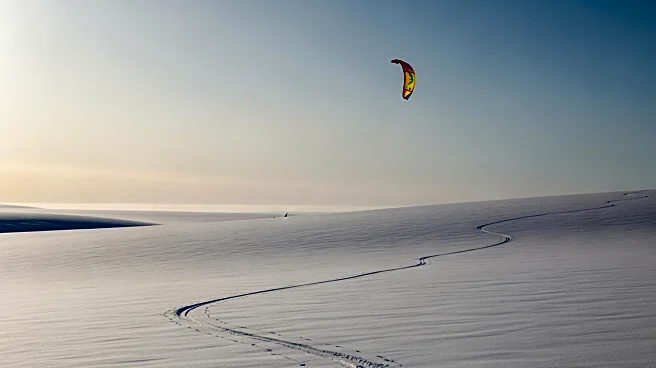
Explorer Matthieu Tordeur and glaciologist Heidi Sevestre are embarking on a 4000-kilometer kite-ski expedition across Antarctica. Their mission is to collect data using ground-penetrating radar to better
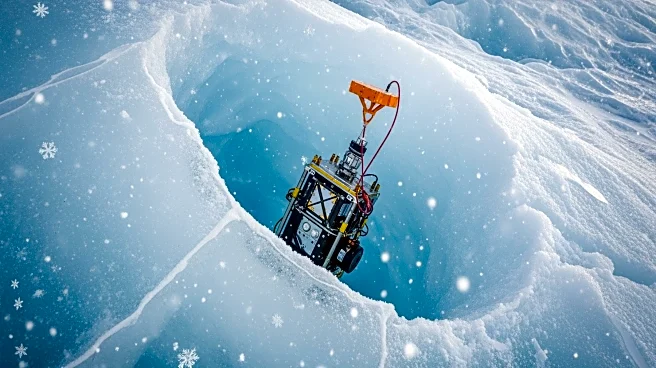
understand the ice sheet's past and future in the context of climate change. The expedition, which began on November 3, involves skiing with kites that can propel them at speeds exceeding 35 kilometers per hour. They are towing sleds equipped with radar capable of scanning up to 40 meters below the snow and ice. This data is crucial for determining whether increased snowfall in East Antarctica is compensating for the melting occurring along the coast. The expedition aims to provide more accurate estimates than those currently available from satellite measurements. The team plans to travel from Novo Airbase in East Antarctica to Hercules Inlet in West Antarctica before the end of the Antarctic summer, which marks the end of available flights out of the region.
Why It's Important?
This expedition is significant as it contributes to the understanding of Antarctica's ice sheet dynamics, which are critical in predicting global sea level rise. The data collected could help resolve debates about whether West Antarctica, which holds enough ice to raise sea levels by up to 5 meters, completely melted during the last interglacial period. Understanding these dynamics is essential for assessing the ice sheet's stability under current climate conditions. The expedition's findings could influence global climate models and inform policy decisions related to climate change mitigation and adaptation strategies. The research also highlights the innovative use of kite-skiing as a method to access remote areas of Antarctica, providing a new approach to conducting scientific research in extreme environments.
What's Next?
The expedition is expected to continue for three months, during which Tordeur and Sevestre will traverse challenging terrain, including sastrugi, which are wind-sculpted snow formations. They plan to use a more powerful radar from the South Pole to trace ancient ice layers, potentially providing insights into the historical stability of the West Antarctic ice sheet. The results of this research could have implications for future scientific expeditions and the methodologies used in polar research. Additionally, the data collected may contribute to ongoing discussions about the impact of climate change on polar regions and global sea levels.
Beyond the Headlines
The expedition underscores the importance of combining adventure with scientific inquiry, as demonstrated by Tordeur's decision to integrate his passion for exploration with meaningful research. This approach not only advances scientific knowledge but also raises public awareness about the impacts of climate change on polar regions. The use of kite-skiing as a research method highlights the potential for innovative techniques to overcome logistical challenges in remote and harsh environments. Furthermore, the expedition serves as a reminder of the historical context of polar exploration, drawing parallels with past expeditions and emphasizing the enduring human spirit of discovery.