






What's Happening?
Countries have taken a significant step towards establishing the world's first international rules to combat environmental crime, including wildlife trafficking, illegal deforestation, and illicit waste smuggling. Negotiations for a draft protocol will
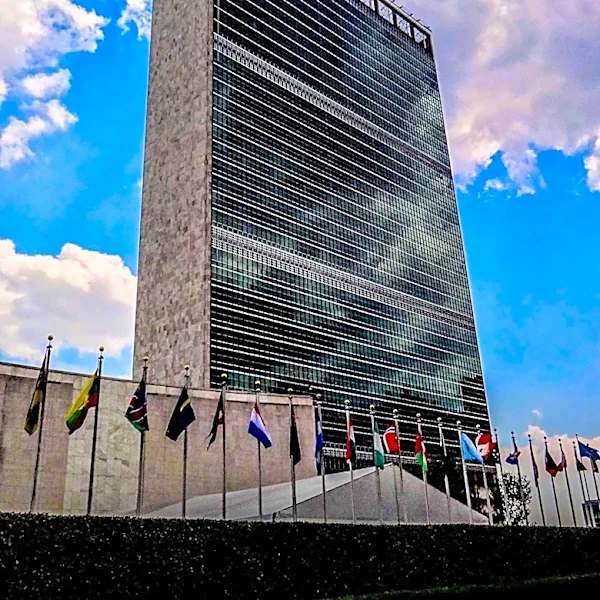
commence under the United Nations Convention against Transnational Organized Crime (UNTOC), following a resolution approved on October 23 at its 13th biennial gathering. The proposal, spearheaded by Brazil and supported by 11 other countries from Latin America and Africa, secured more than the required two-thirds majority, with 83 votes in favor, 12 against, and 27 abstentions. Notably, the U.S. voted against this measure. The draft protocol aims to enhance the investigation, prosecution, and adjudication of these crimes, which are valued at up to $281 billion annually and often orchestrated by international syndicates.
Why It's Important?
The U.S. vote against the resolution to establish international rules for fighting environmental crime is a significant development, potentially isolating the U.S. from a growing global consensus on this issue. Environmental crimes have far-reaching consequences, impacting not only ecosystems but also the rule of law, economies, public health, and human safety. The lack of a unified international legal framework has allowed criminal networks to exploit jurisdictional gaps and varying penalties worldwide. While 83 countries recognized the urgency of closing these gaps through a dedicated international agreement, the U.S. opposition could complicate future multilateral efforts and its standing in global environmental governance. This divergence highlights differing approaches to addressing transnational environmental threats and the role of international cooperation.
What's Next?
Negotiations for the draft protocol on environmental crime will proceed over the next two years, with discussions scheduled for the next UNTOC gathering. Despite the U.S. opposition, the strong international support for the resolution indicates a clear global intent to move forward with establishing these rules. The absence of U.S. participation in the drafting process could lead to a protocol that does not fully align with U.S. legal frameworks or priorities, potentially creating challenges for future enforcement or cooperation. Other major stakeholders, including environmental organizations and the countries that championed the resolution, will likely continue to advocate for robust international mechanisms to combat these crimes, emphasizing the need for global collaboration to address a problem that transcends national borders.
Beyond the Headlines
The U.S. decision to vote against the resolution raises deeper questions about its commitment to international environmental governance and its approach to transnational crime. While the U.S. has its own robust environmental laws, its refusal to join a global effort to harmonize legal frameworks and enhance cooperation could be perceived as a reluctance to engage in multilateral solutions for shared global challenges. This stance might also reflect concerns about sovereignty, the scope of international legal obligations, or the potential economic implications for U.S. industries. The incident underscores the complex dynamics of international diplomacy, where national interests and differing legal philosophies can impede collective action on issues with universal impact, such as environmental protection and combating organized crime.