


What's Happening?
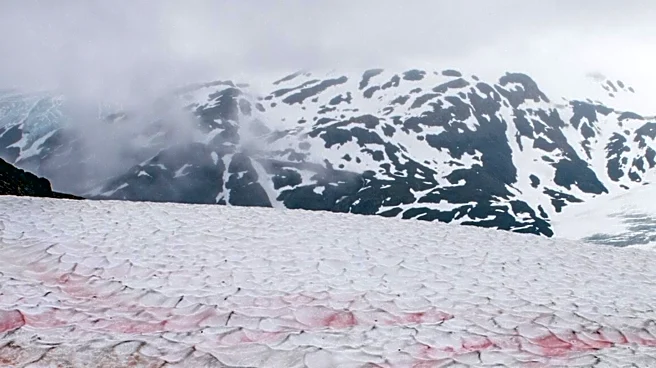
Blood Falls, a natural feature in East Antarctica, is known for its striking red-orange saltwater, which flows from Taylor Glacier into Lake Bonney. Recent research has uncovered a complex microbial ecosystem thriving in the red-stained ice and sediments,
suggesting that the brine originates from ocean water trapped millions of years ago. The study, published in Nature Geoscience, found marine-associated microbes in the area, supporting the theory that the falls are fed by a long-isolated pool of marine water. This discovery highlights the adaptability of life in extreme environments and provides insights into the ancient origins of the falls.
Why It's Important?
The findings at Blood Falls have significant implications for understanding microbial life in extreme environments and the history of Antarctica's climate. The presence of marine microbes far from the ocean suggests that ancient flooding events may have shaped the region's geological features. This research enhances our knowledge of how life can adapt to harsh conditions, which could inform studies on climate change and the potential for life on other planets. The study also underscores the importance of preserving unique ecosystems that offer valuable scientific insights.