






What's Happening?
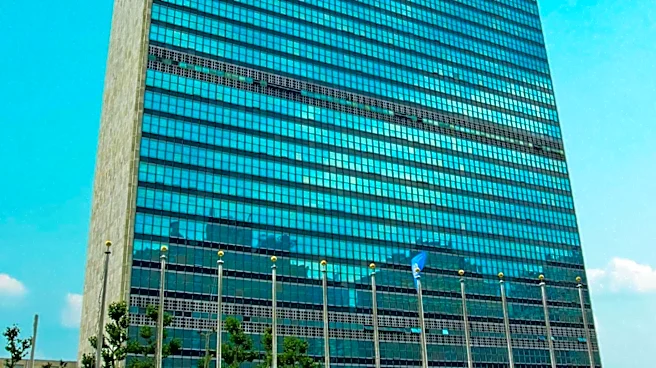
Deemah AlYahya, the Secretary-General of the Digital Cooperation Organisation (DCO), has been appointed by UN Secretary-General António Guterres to a United Nations high-level panel. This panel is tasked with examining freedom of transit for landlocked
developing countries (LLDCs). AlYahya is the sole Saudi representative and the only representative from the Arab region on the High-Level Panel on Freedom of Transit for Landlocked Developing Countries (HLP-FoT). Her appointment aims to bring a digital economy and international cooperation perspective to the panel, which will focus on identifying practical solutions to help LLDCs overcome barriers to international trade and improve access to global markets. The DCO, an international multilateral organization headquartered in Riyadh, focuses on inclusive growth in the digital economy and digital prosperity, with Cyprus being one of its member states. AlYahya is currently serving her second term as DCO Secretary-General. The UN panel comprises senior representatives and experts from governments, international organizations, the private sector, and academia, selected through a consultative process involving nominations by UN member states. The panel will analyze challenges and implementation gaps affecting freedom of transit for the world's 32 LLDCs.
Why It's Important?
This appointment is significant as it integrates the critical perspective of digital economy and international cooperation into global development efforts for landlocked developing countries. Deemah AlYahya's expertise in digital economy programs, innovation ecosystems, and cross-border cooperation, particularly within Saudi Arabia and the DCO, will be crucial in developing practical recommendations. Digital and customs tools are increasingly vital for international trade, and her insights can help LLDCs leverage digital systems to facilitate trade, enhance efficiency, and connect with international markets. The DCO's focus on digital prosperity aligns with the panel's goal of strengthening transit systems and improving market access, potentially leading to innovative, technology-driven solutions for these geographically disadvantaged nations. Her role also highlights the growing recognition of the digital economy as a key enabler for sustainable development and trade, especially for countries facing unique geographical barriers. This initiative could foster greater digital inclusion and economic integration for LLDCs, ultimately contributing to their overall development and reducing their vulnerability in global trade.
What's Next?
The High-Level Panel on Freedom of Transit for Landlocked Developing Countries will proceed with its examination of challenges and constraints affecting LLDCs. AlYahya is expected to contribute her expertise in international cooperation, multilateral diplomacy, policymaking, investment, and development across borders to the panel's work. The panel's objective is to develop practical recommendations aimed at strengthening transit systems and improving access to international markets. These final recommendations are anticipated to be presented to UN member states during the 82nd session of the UN General Assembly. Her previous advocacy for cooperation that moves beyond formal declarations towards practical opportunities suggests that the panel's outcomes may emphasize actionable strategies. Furthermore, her recent engagements, such as strengthening cooperation with Cypriot institutions on digital investment, AI, and connectivity, indicate a proactive approach to fostering digital hubs and cross-border collaboration, which could inform the panel's recommendations for LLDCs.
Beyond the Headlines
Deemah AlYahya's appointment to the UN panel underscores a broader global shift towards recognizing the digital economy as a fundamental pillar of development and trade. This move signifies that digital transformation is no longer a peripheral issue but a central component in addressing complex challenges like geographical barriers to trade. The inclusion of a digital economy expert from the DCO on such a panel highlights the increasing importance of digital diplomacy and cross-border data governance in shaping international policy. It also reflects a growing understanding that technological solutions can mitigate traditional development hurdles, offering new pathways for economic growth and integration for vulnerable nations. This initiative could catalyze a more concerted global effort to bridge the digital divide and ensure that all countries, regardless of their geographical location, can participate equitably in the global digital economy. The emphasis on practical, digitally-driven solutions could set a new standard for international development cooperation, fostering innovation and resilience in the face of global challenges.